

FOS Future Lab: How 1960s Italy built tomorrow — and made it beautiful
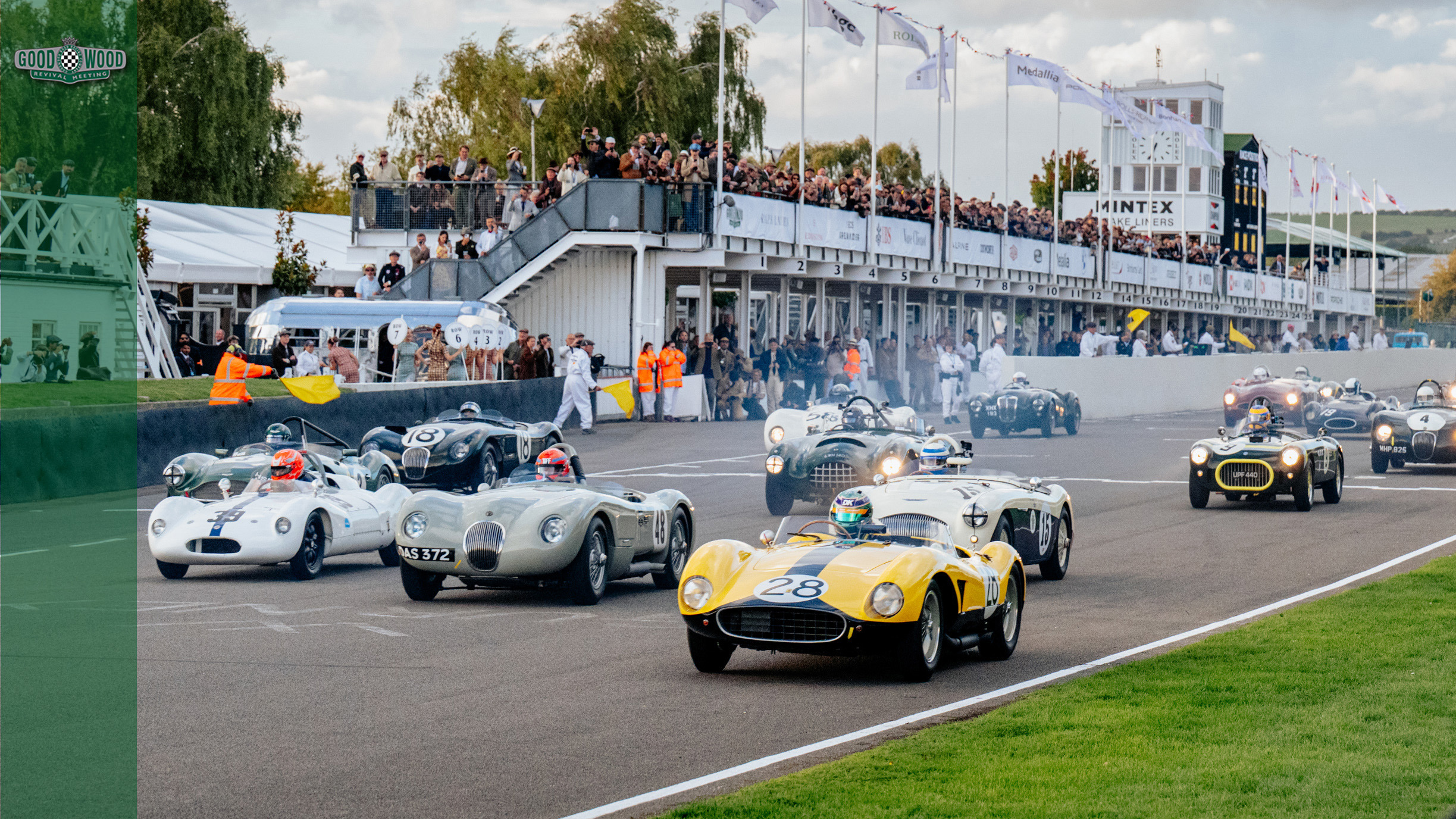
When the Goodwood Revival presented by Dunlop returns on 18th–20th September 2026, it will do so adorned in all things Italian; the theme woven throughout is ‘La Dolce Vita’, whilst Maserati celebrates 100 years since its first major motorsport success.
The years the Revival lovingly recreates, 1948-66, were not just Italy's fastest but were among its most inventive. This was the country's ‘economic miracle’, a stretch when industry grew at more than eight per cent a year, and a nation flattened by war remade itself.
Which got us thinking: if FOS Future Lab presented by Randox had embraced a 1960s Italian theme, what would it have shown? Fusion rockets, deep-sea habitats, and the inside story on humans' return to the Moon were all key topics in 2026. Rewind decades, and Italy was generating the same sort of hard science made not only tangible, but disarmingly attractive, too.
Birds of a feather
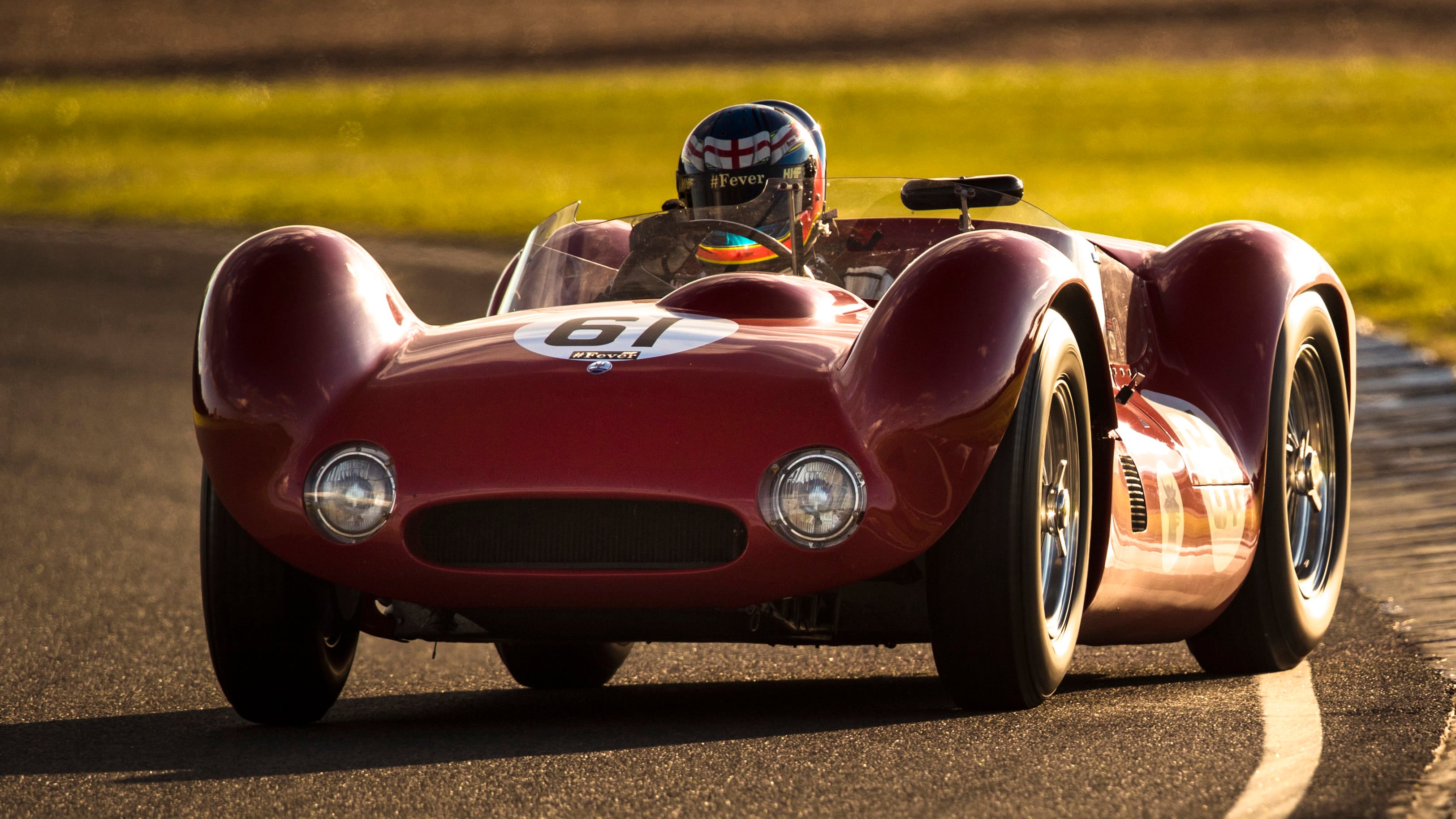
The Maserati Tipo 60/61 ‘Birdcage’ was developed between 1959 and 1961. Its chassis was the work of engineer Giulio Alfieri, who welded together roughly 200 small-diameter steel tubes into an intricate lattice — the ‘birdcage’ for which the car was named.
The whole structure weighed barely 30 kilograms, yet it was stiff enough to race wheel-to-wheel with far bigger machinery, and it did so right through the early 1960s. It’s as much engineering excellence as it is a sculpture, and would have brought FOS Future Lab to a standstill.
Reverting to type
Alfieri's instinct, that the way a thing is built can be as thrilling as what it does, ran right through Italian industry in those years. Nowhere more so than at a typewriter company in the northern town of Ivrea.
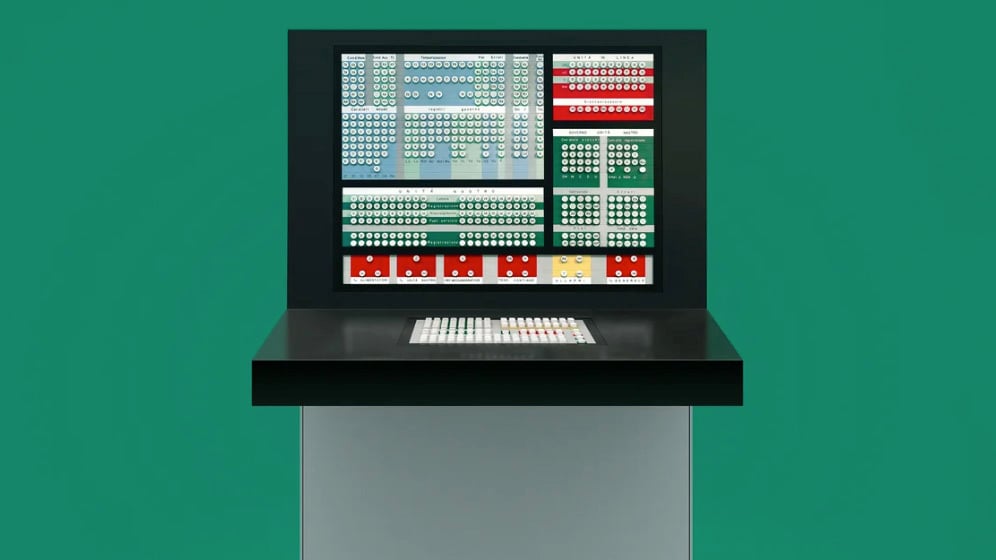
In 1959, Olivetti unveiled the Elea 9003, one of the first commercial computers in the world built entirely from transistors rather than hot, fragile valves. The engineering was led by Mario Tchou, a brilliant young Italian of Chinese descent. The machine's appearance — cabinets you could walk between, a console tiled like a mosaic — was the work of a then-emerging designer named Ettore Sottsass, who won Italy's coveted Compasso d'Oro design award for it.
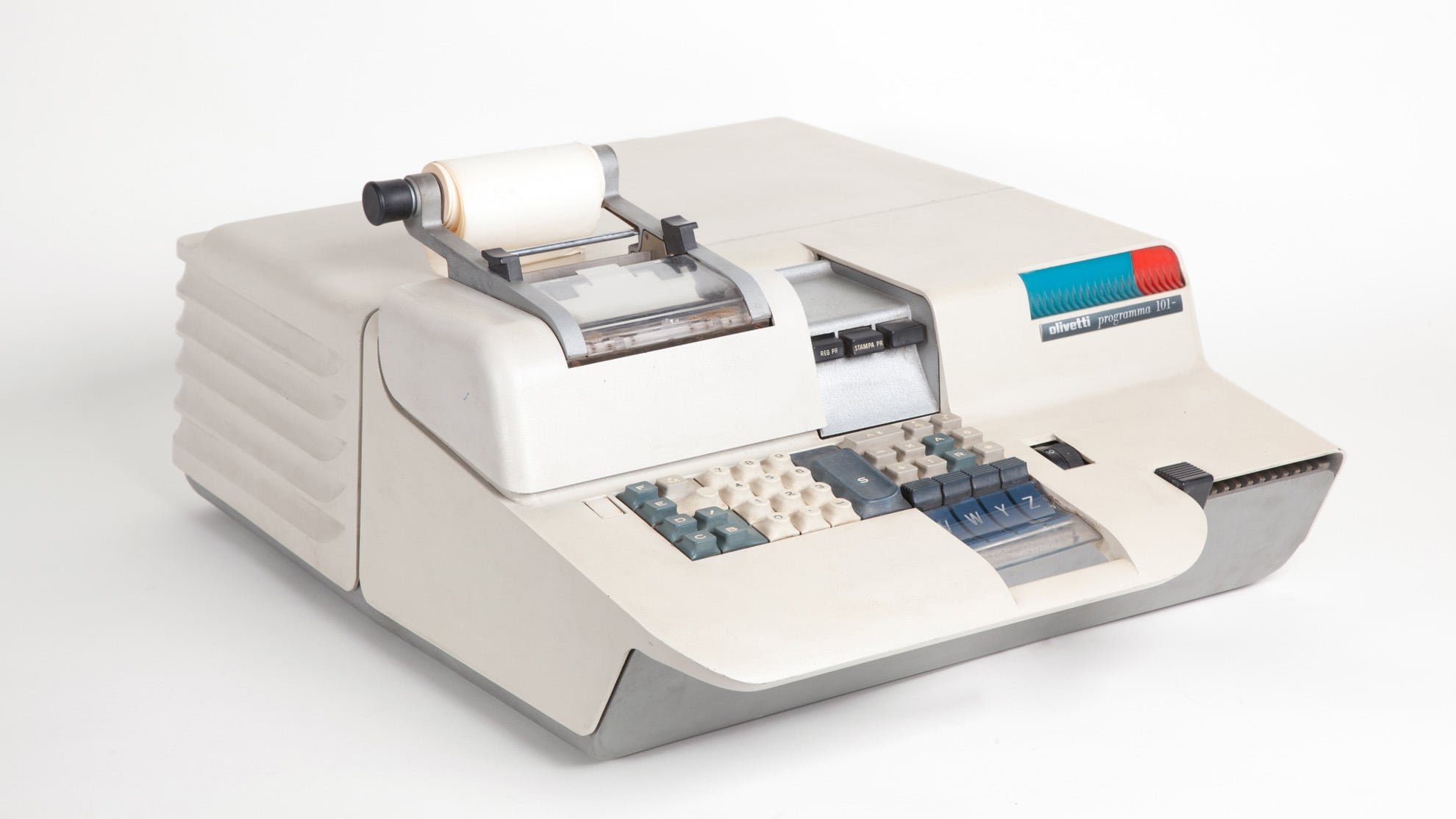
Then came the showstopper. In 1965, Olivetti launched the Programma 101, invented by engineer Pier Giorgio Perotto and nicknamed the "Perottina." Its industrial design fell to a thirty-something Mario Bellini, later one of the great names of the century.

About the size and weight of a typewriter, it sat on an ordinary desk, ran programs from magnetic cards, and is widely regarded as the first desktop personal computer, arriving a full decade before Silicon Valley had the idea.
To grasp why that mattered, picture what a computer was in 1965: a room. Businesses rented time on machines the size of a wardrobe, tended by specialists in white coats, and ordinary people never went near one. The Programma 101 put that power on a single desk, for a single user, at a price a company could actually justify.
It was, in every meaningful sense, personal, and the word we would later bolt onto the whole revolution. An Italian typewriter firm got there first.
The machine that helped the Moon landing
Here is the detail that ought to make every FOS Future Lab visitor stop. When NASA needed to crunch the numbers for Apollo 11, it bought ten Programma 101s and used them to help calculate trajectories, fuel loads and the lunar module's landing time.
So, an Italian desktop computer the size of a briefcase helped put human beings on the Moon, which brings the story neatly up to date.
Apollo proved we could reach the Earth’s only natural satellite; this year's FOS Future Lab ‘Return to the Moon’ zone was all about the far harder job of going back to stay. We met the Airbus engineers building the European Service Module that powers NASA's Orion spacecraft, whose programme motto is bluntly ambitious — "this time to stay".
We tracked Artemis II all the way to the first crewed loop around the Moon in more than 50 years. For co-curator Sir Tim Peake, the clear goal this time isn't a flag-planting race, it’s to establish a permanent lunar base as a research laboratory.
A few steps away sat a rocket engine bound for Mars, fresh from Pulsar Fusion's first plasma firing and promising to halve the journey to the red planet on grams of fuel rather than tonnes. A touchscreen let families fly the Artemis II mission themselves, built by a studio that turns rocket science into playable animation.
Nearby, on the far side of the New Frontiers zone, Deep revealed how the ocean becomes a proving ground for space as aquanauts graduate to astronauts. And we highlighted how careers-in-space continue to press a point Perotto proved long ago: the final frontier needs coders, designers and animators as much as astronauts.
The future Italy let slip
There's a melancholy coda to the Olivetti story. Adriano Olivetti, the visionary boss who bet the company on electronics, died suddenly in 1960. A year later, Mario Tchou was killed in a motorway crash, aged just 37 — a loss so abrupt a folklore of foul play still clings to it, though nothing has ever been proven.
Without them, Olivetti's electronics division was sold to America’s General Electric, and Italy's remarkable lead in computing simply evaporated. The country that arguably invented the personal computer handed the future to someone else.
If there's a reason a place like FOS Future Lab exists, it's buried in that sentence. New frontiers have to be championed, funded and shown to the next generation before they slip away.
Four more exhibits
Olivetti wouldn't have had the hall to itself. A FOS Future Lab of the 1960s could have filled a wing with Italian firsts. There would be the concrete of Pier Luigi Nervi, the engineer whose thin, sweeping domes for the 1960 Rome Olympics — like the Palazzetto dello Sport — made engineering beautiful.
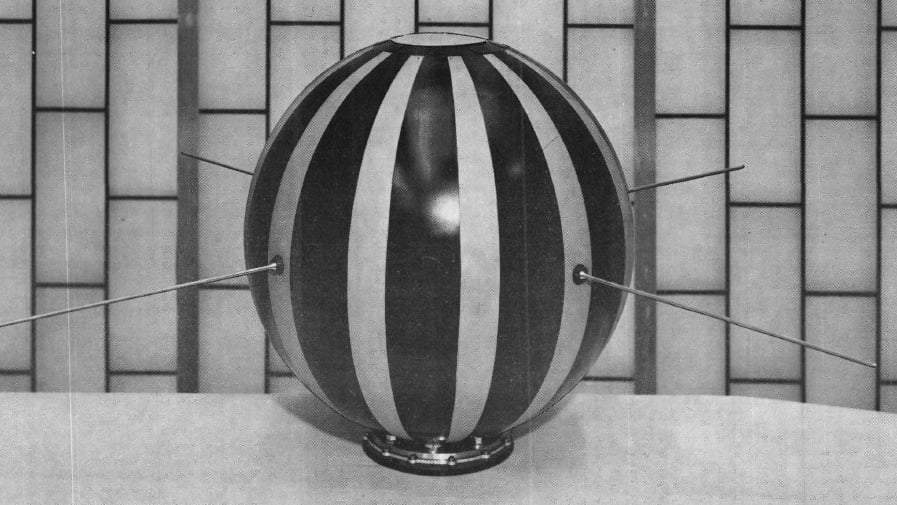
There would be a slice of the space programme, too. In 1964, with the launch of San Marco 1, Italy became the third nation able to put a satellite into orbit with its own launch team — after only the Soviet Union and the United States. The work of aerospace pioneer Luigi Broglio, he would later run his launches from a converted oil platform off the coast of Kenya.
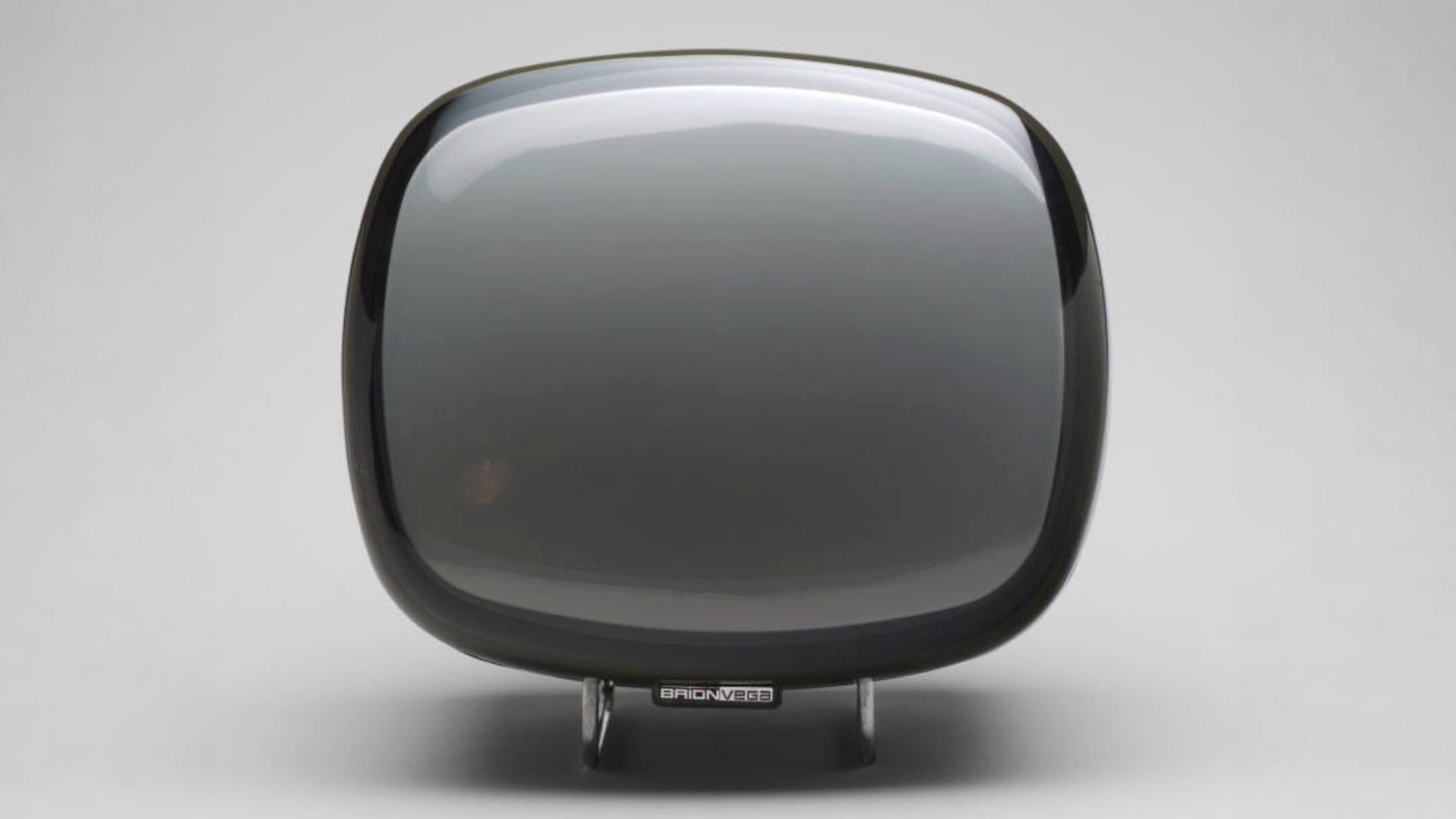
The Brionvega Doney of 1962 was Europe's first fully transistorised portable set, designed by Marco Zanuso and Richard Sapper using the same kind of transistors then going into missile guidance systems, and another Compasso d'Oro winner.
Parked by the FOS Future Lab door would inevitably be a Vespa, the focus of celebrations during the 2026 Revival’s Track Opening Parade. The 1946 scooter had an aeronautical engineer, Corradino D'Ascanio, and was built like a small aircraft, with a load-bearing monocoque body in place of a motorcycle's exposed frame. Aviation thinking, applied to urban life.
While this year’s Goodwood Revival looks back a hundred years to Maserati’s origins, FOS Future Lab spends its days looking forward to the Moon and beyond. What connects them is a very Italian idea from a very Italian decade: that frontiers are worth chasing, and that it ought to be beautiful when you get there.
Randox is a global leader in diagnostics, revolutionising patient outcomes through innovative technologies, including its patented biochip technology. This pioneering diagnostic platform allows for the simultaneous detection of multiple biomarkers from a single sample, delivering faster, more accurate, and comprehensive results. Operating in over 145 countries, Randox develops advanced laboratory instruments, high-quality reagents, and innovative testing solutions to improve global healthcare.
Randox Health brings this cutting-edge technology directly to individuals, offering bespoke, preventative health testing programs. With world-class laboratories and personalised health insights, Randox Health enables early detection of a wide range of conditions, helping individuals take control of their health.
Together, Randox and Randox Health are redefining diagnostics and preventative healthcare. For more information, visit www.randox.com and www.randoxhealth.com.
Main image photography by Drew Gibson.
The 2027 Festival of Speed will take place on 15th-18th July 2027, sign up for ticket alerts to make sure you don't miss out. Tickets are available for GRRC Members and Fellows, you can join the Fellowship today.
festival of speed
fos
fos future lab
revival
revival 2026
event coverage

Subscribe to Goodwood Road & Racing
Thank you, you’re now subscribed

How many hay bales are used at FOS?
For the last two years, 5,800 bales have been recylced into the biomass energy centre to be used for energy generation