

Celebrating the traditions of the Goodwood 9 Hours
Tantalising news of a significant change to the shape of Sunday at the Goodwood Revival presented by Dunlop and the signature RAC TT Celebration, which this year moves to the end of the day, offering a fitting crescendo to the world’s greatest historic race meeting.
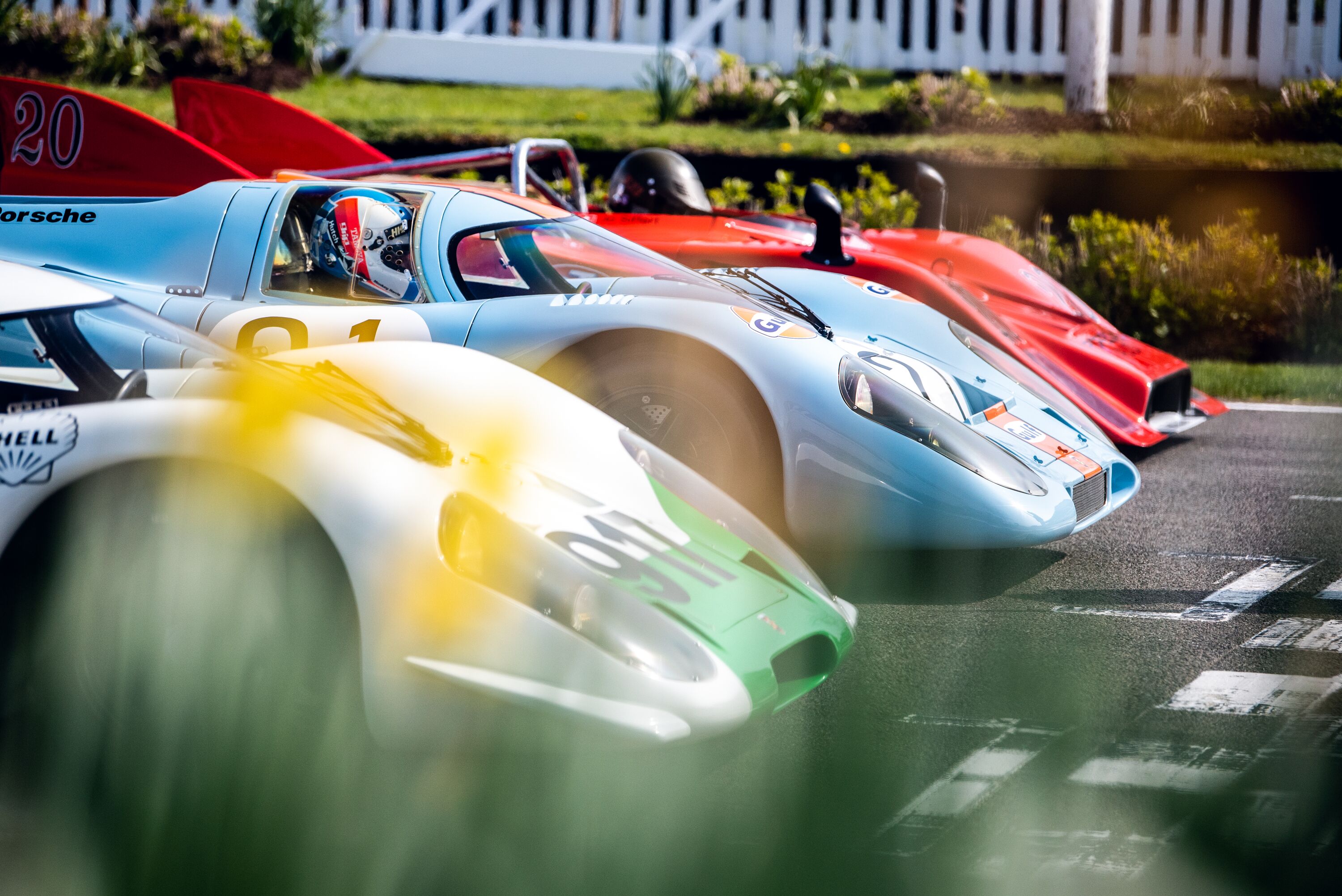
Like modern Formula 1 Grands Prix, the headline race of the weekend is now saved until last. Also, the Revival’s marquee race will be enhanced further by tweaks to ratchet up the sense of occasion. This includes an old Le Mans-style start, with the grid lined up along the pitwall at an angle.
Goodwood is famed for its creativity, for shaking things up, and complacency is an anathema down at the West Sussex estate. Then again, it’s always been that way. Back in the circuit’s period life between 1948-66, the ambition to offer more and something different was at the heart of why Goodwood thrived. There’s nothing else like it, then and now.
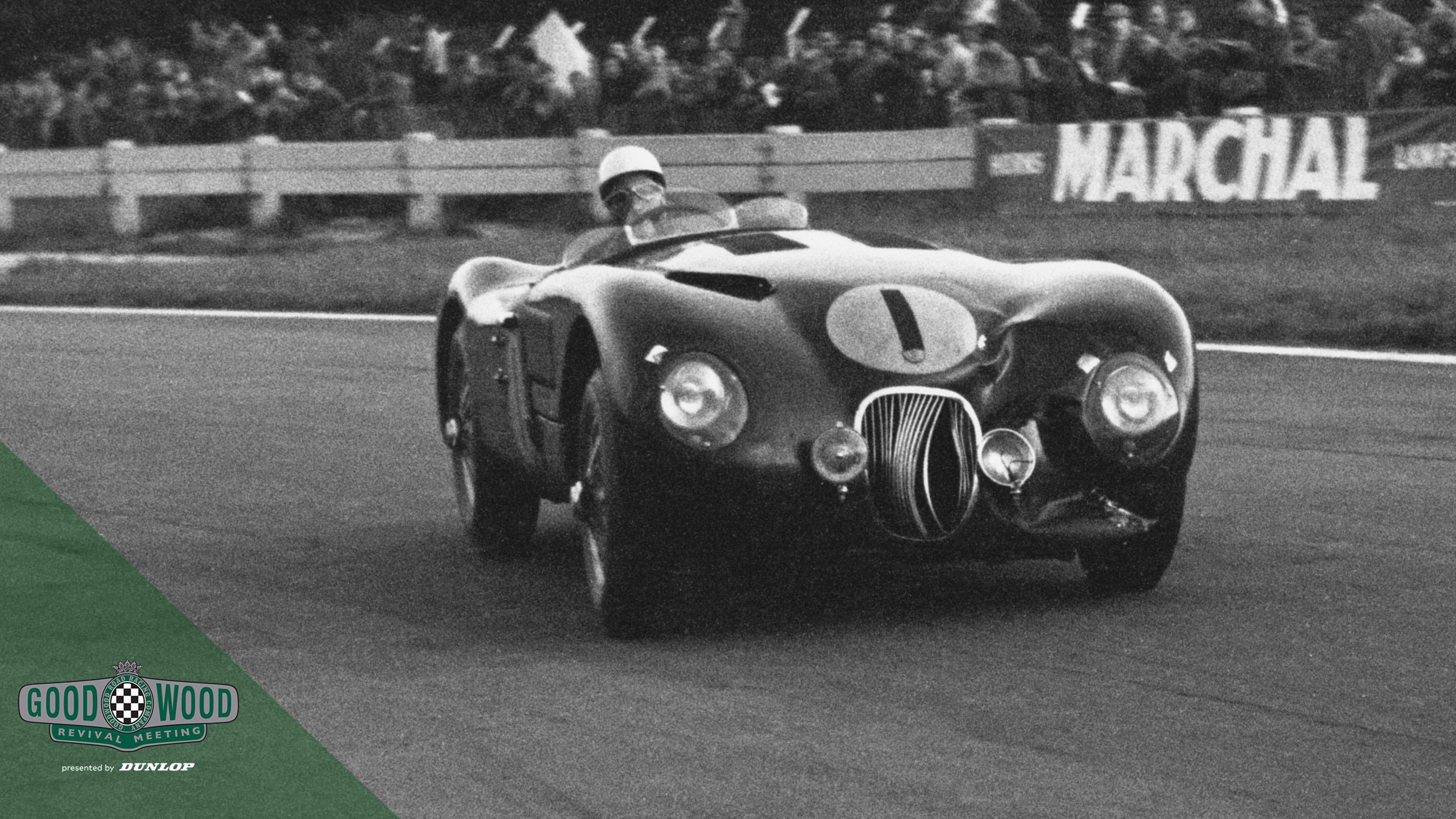
Take the Goodwood 9 Hours. That also took inspiration from Le Mans, reviving endurance sportscar racing in the UK for the first time since pre-war eras at Brooklands. Back in 1952, Goodwood broke new ground, and even if it’s the Freddie March Memorial Trophy that traditionally evokes the Nine Hours at the modern Revival, the tweaked RAC TT Celebration certainly carries echoes of the old enduro — in the same spirit. Let’s scroll back to remind ourselves why.
1952: Aston Martin gets one over Jaguar
The idea of a day-into-night sportscar race is credited to Christopher Jennings, editor of The Motor, and BARC secretary John Morgan. A little like the Sebring 12 Hours, the concept was based around an afternoon start running to a finish at midnight.
The logistics of running into darkness are a challenge for circuits today, never mind back in the 1950s. Illumination around the circuit required a significant investment, and then there was how to organise officiating and marshalling. The foundation of the Nine Hours took a serious amount of work.
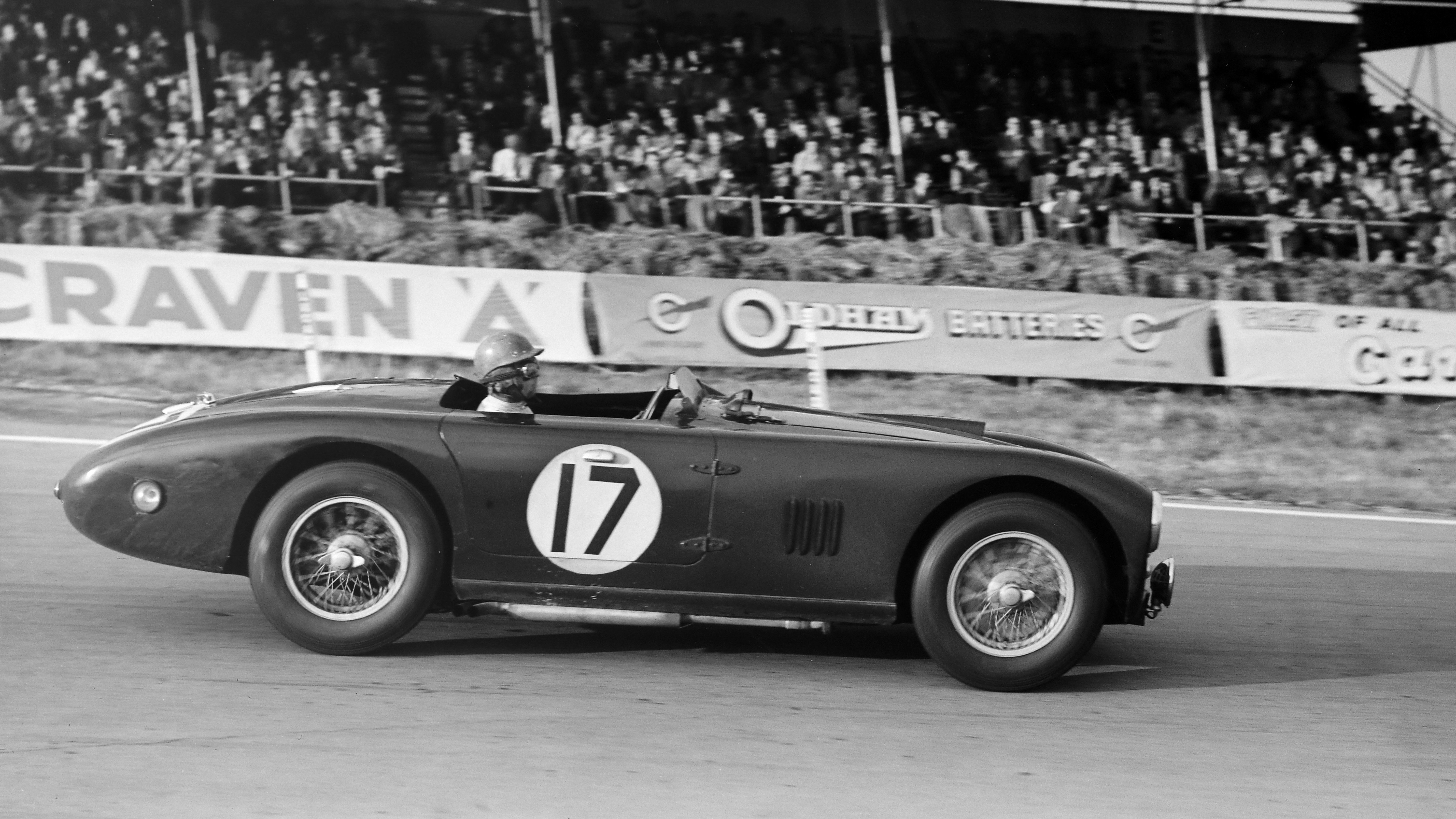
The Aston Martin DB3 of Peter Collins and Pat Griffith won the inaugural Goodwood 9 Hours, August 1952.
Image credit: Getty ImagesFunding came from a major national newspaper, as was common back then. News of the World chairman and managing director Mr W Emsley Carr was an enthusiastic supporter of motor racing as a promotional tool and put up a generous prize fund, including 1,000 guineas for the winning team.
A suitable date couldn’t be found in 1951, so the first Nine Hours was postponed for a year, to 16th August 1952. The idea clearly caught the imagination because the entry was oversubscribed, even if it failed to draw much continental interest, beyond a Talbot for ‘Levegh’. However, both Aston Martin and Jaguar sent works teams, with a respective pair of DB3s and a trio of C-types. The two most prominent British sportscar manufacturers going head-to-head against a couple of private Ferraris boded well.
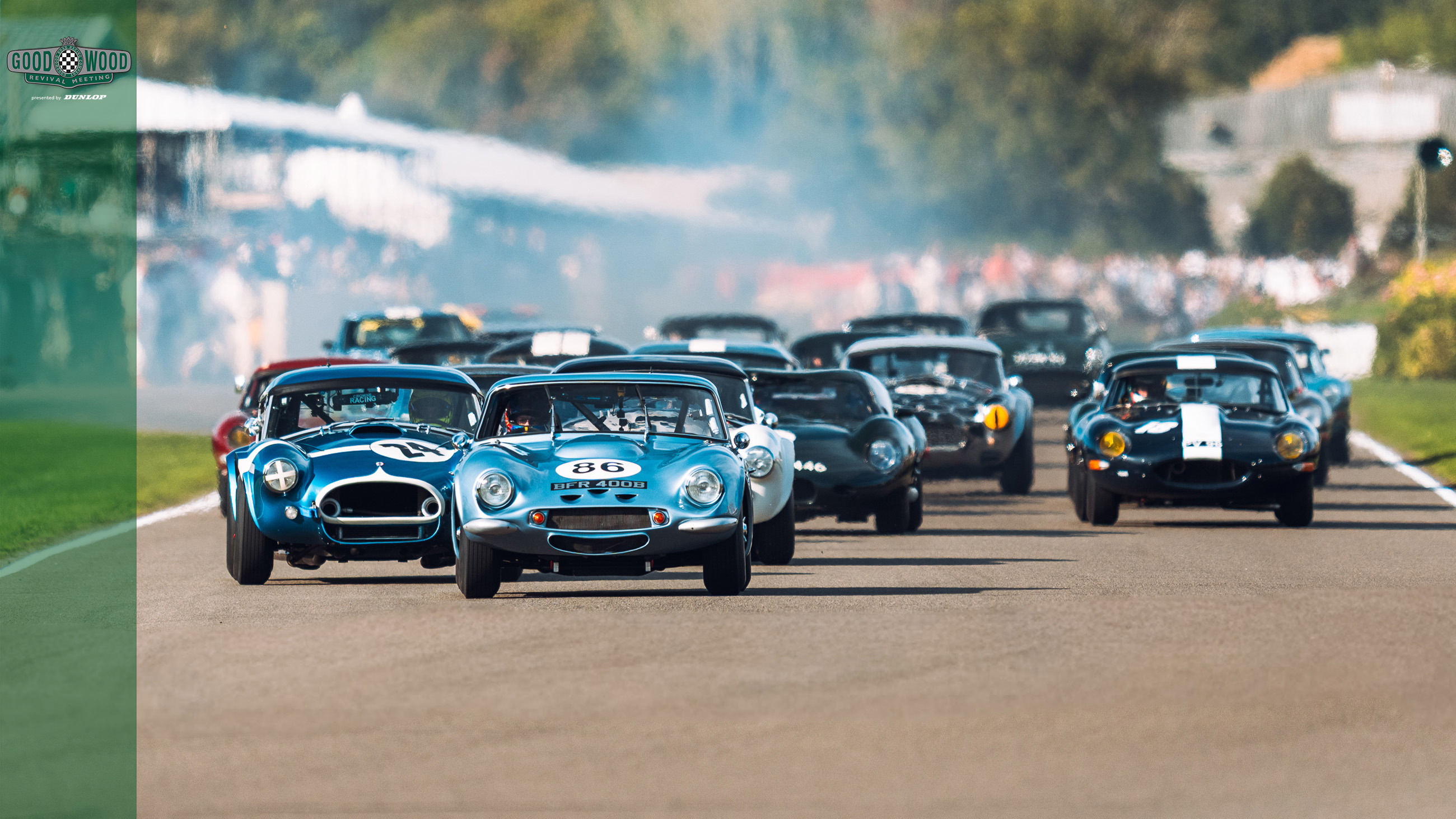
Sure enough, the race proved eventful and hard fought, with the fast and bumpy nature of the Motor Circuit taking its toll on both drivers and machines.
The bigger-engined Jaguars predictably had the legs over the Astons, only for what Motor Sport’s report called a “foregone conclusion” to falter within the space of a few minutes. First, the leading C-type of Duncan Hamilton and Tony Rolt lost a wheel and crashed out, then Stirling Moss coasted to the pits with broken suspension on the car he shared with Peter Walker.
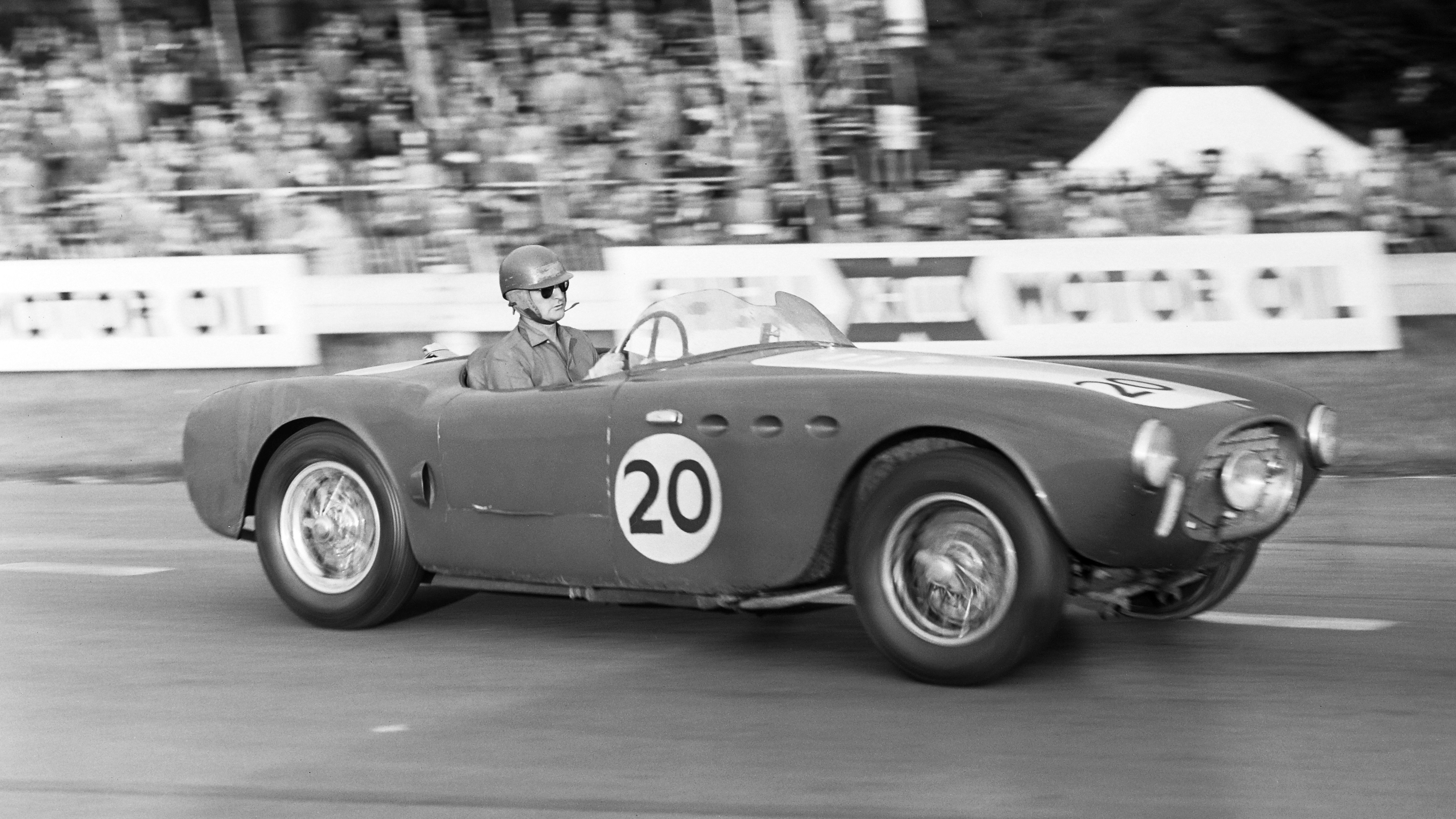
Tom Cole and Graham Whitehead’s Ferrari 225S raced to a second-place finish at the Goodwood 9 Hours, August 1952.
Image credit: Getty ImagesRoy Salvadori, that master of Goodwood, was going great guns in a Ferrari. But a battery change cost him laps, which left Peter Collins and Pat Griffiths to prevail for Aston. So, a happy ending for the Feltham marque, after a close shave with serious disaster. What Motor Sport described as a refuelling stop undertaken “with more enthusiasm than discretion” led to a frightening pit fire.
Reg Parnell jumped from the cockpit to safety, but team manager John Wyer and two others received nasty burns in an incident that foreshadowed the better-known pit fire at the 1959 Goodwood TT. Strange how on both occasions the day ended well for Aston, with the team securing the World Sportscar Championship at the latter.
1953: Aston does it again
“For the second time the BARC Nine-Hour Race was a great success, besides being a picturesque spectacle as the Sussex circuit twinkled with fairy lights,” began Motor Sport’s report in 1953, as once again Aston Martin and Jaguar went head-to-head.
And once again the Feltham cars came out on top, in what Motor Sport described as “one of the toughest sportscar races there is.
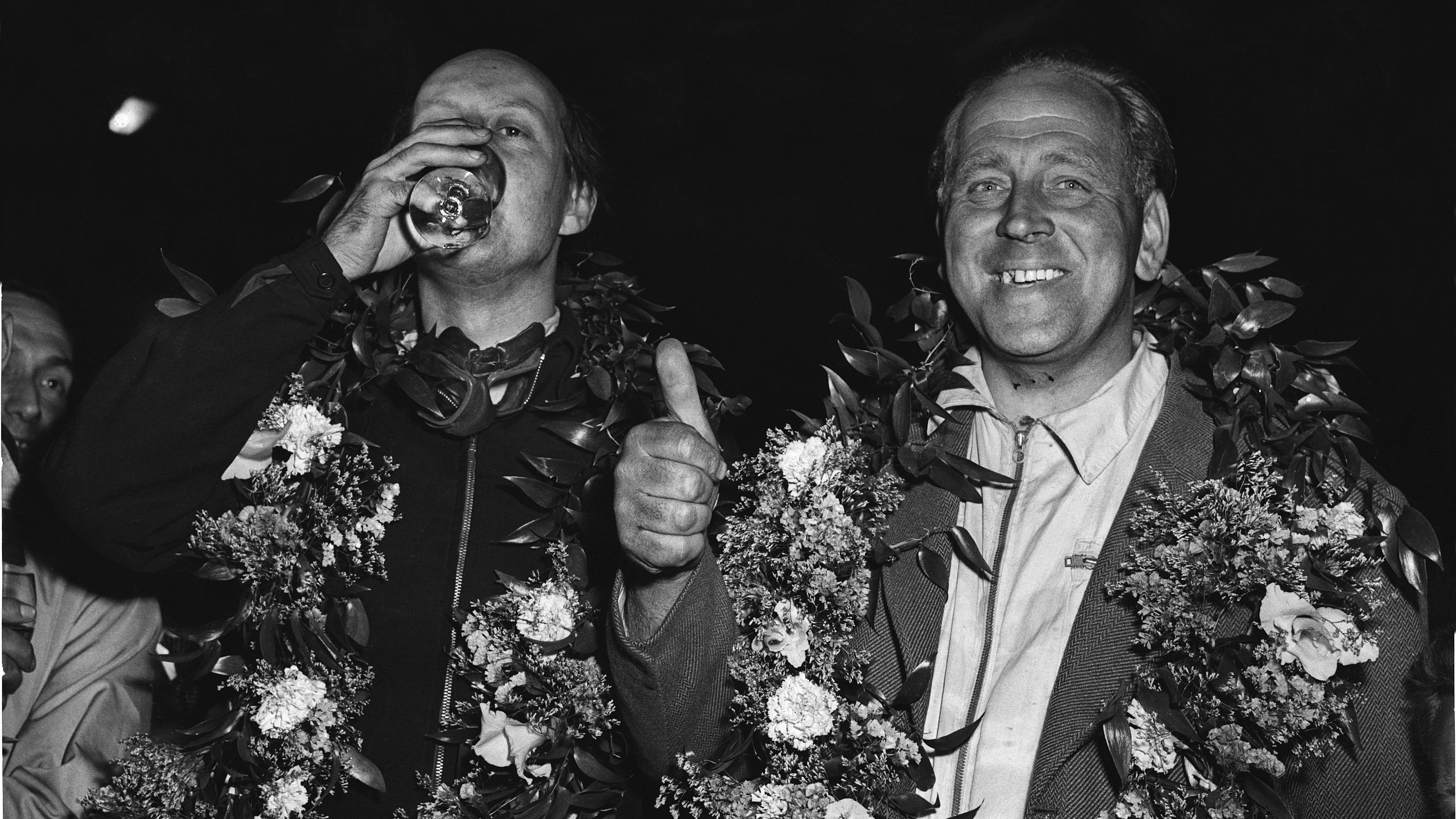
Reg Parnell and Eric Thompson celebrate after guiding their Aston Martin DB3S to victory at the 1953 Goodwood 9 Hours.
Image credit: Getty ImagesThis was proved when Jaguars, which ran trouble-free for 24 hours at over 100mph at Le Mans retired after averaging around 80mph for eight hours at Goodwood, their disc brakes failing, their bearings worn out — and by the heavy consumption of tyres.”
The Avon-shod Astons also had their fair share of tyre failures, but when the Moss/Rolt C-type retired late in the race with falling oil pressure, Parnell and Eric Thompson were left two laps clear of team-mates Collins and Griffiths for a DB3S one-two. Peter Whitehead, sharing a C-type with Ian Stewart, chased Griffiths hard to break the Aston sweep, but came up just short.
The hope was still at this stage that the Nine Hours might herald a longer endurance, perhaps even a 24-hour race. But that wasn’t how it worked out.
1955: Aston’s hat-trick
As it turned out, there would be only one more Goodwood Nine Hours. After a year off in 1954, it returned in the summer of ’55 with a bumper 35-car entry which included not only Jaguar and Aston Martin but also Ferrari, plus a supporting cast packed with variety — including Colin Chapman in a Lotus.
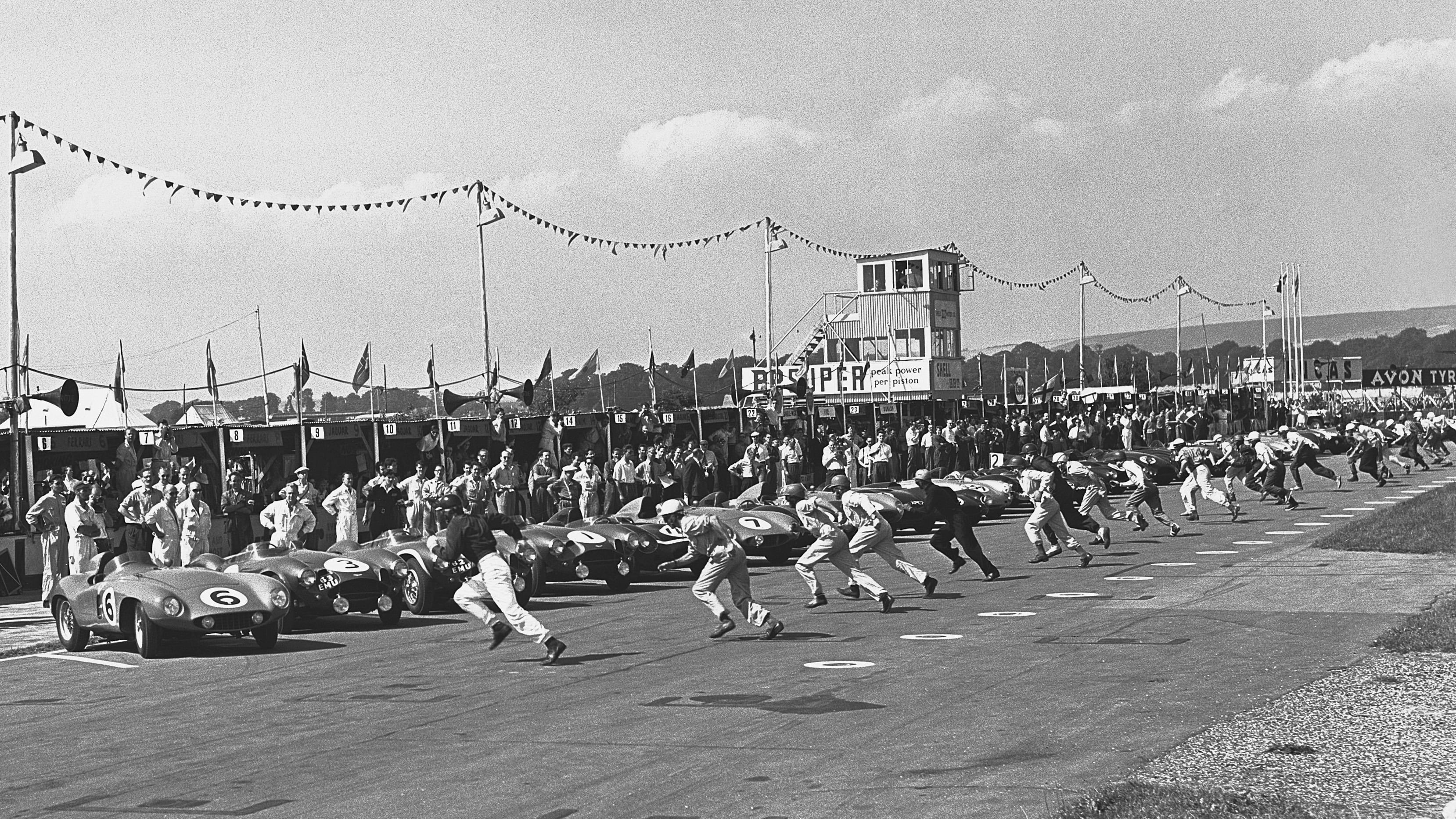
The 1955 Goodwood 9 Hours Race gets underway at the Goodwood Motor Circuit with a Le Mans-style start at exactly 3pm.
Image credit: Getty ImagesNo Mercedes-Benz, sadly, in the wake of the Le Mans disaster that year in which more than 80 spectators died when poor Levegh’s 300 SLR was launched into the crowd on the start/finish. Therefore, Stirling Moss lined up in a little Porsche 550 Spyder, partnering the marque’s sports boss Huschke von Hanstein.
If you search for the race online, you’ll find a terrific 20-minute film, mostly shot in colour. It captures period Goodwood in all its considerable glory, including the Le Mans-style start, with Moss stalling and getting away dead last.
On a glorious summer’s day, Ferraris, Jaguars and Astons all spent time in the lead. But unreliability struck the 750 Monzas. Mike Hawthorn, paired with Alfonso de Portago, led the early stages, but had already fallen out of contention with gearbox bothers when his Ferrari was eliminated in an accident late in the race.
In the film, cars race by haystacks and crops in what looks an idyllic scene. But it also covers the darkest side of motor racing. The tone changes, but only briefly, as marshals tend to a mangled, steaming wreck of a Cooper-Bristol and an accident that claimed the life of Mike Keen. As the plummy commentator says: “In the traditions of the sport, the race goes on.” That’s just how it was in 1955.
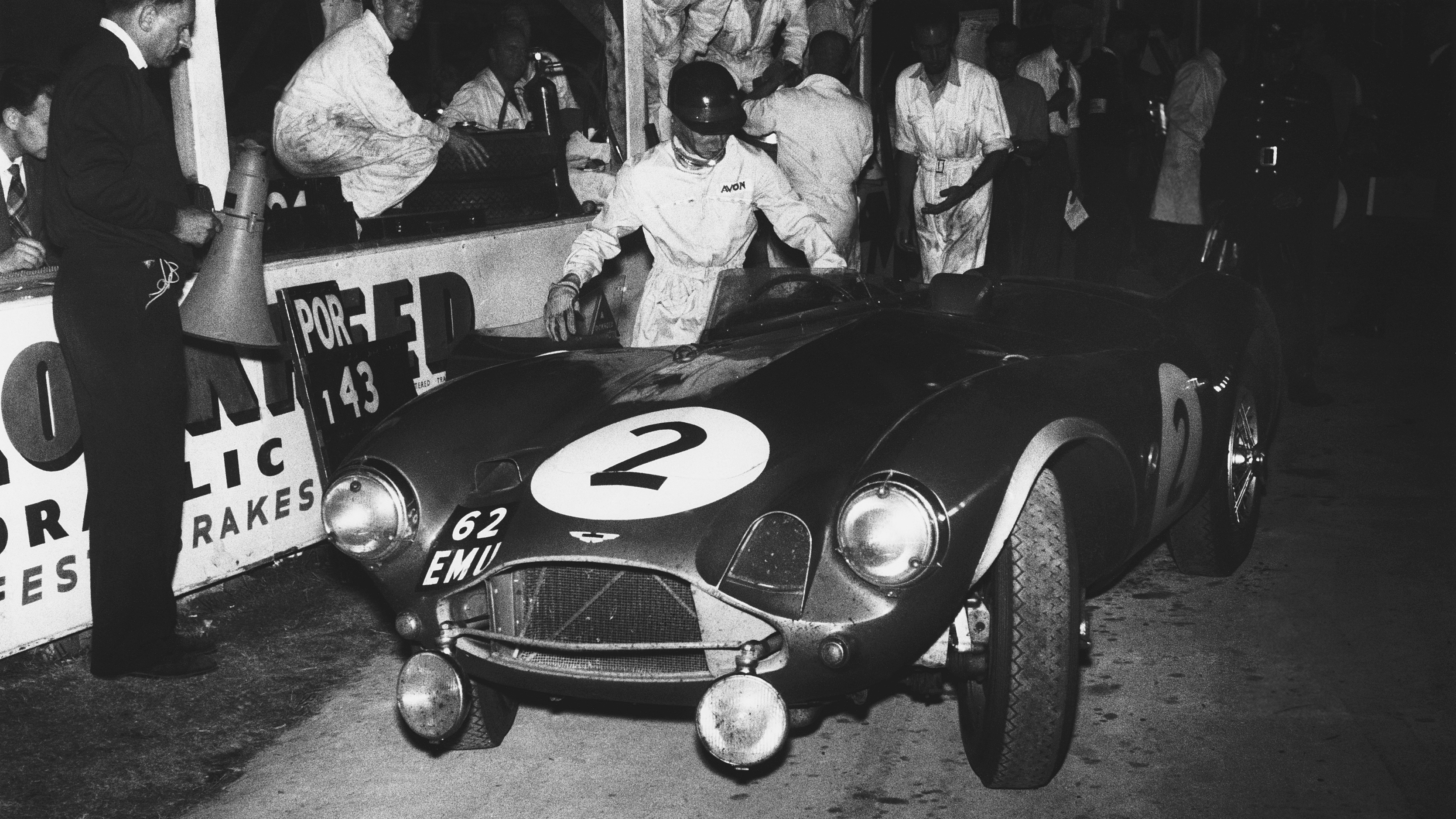
Tony Brooks and Peter Collins’s Aston Martin DB3S at a pit stop during the 1955 Goodwood 9 Hours. They finished third overall.
Image credit: Getty ImagesPeter Collins and Tony Brooks appeared well set for victory in a DB3S, only for electrical bothers in the darkness to scupper their bid. An intermittent misfire and an alarming tendency for the Aston’s headlamps to switch off knocked them back to an eventual third-place finish.
Ahead of them, Desmond Titterington and Ninian Sanderson in Ecurie Ecosse D-type gave chase to Peter Walker and Dennis Poore in DB3S, Walker hampered by the loss of second gear in the final stages. Titterington closed in but ran out of time as the clock struck midnight. Thus, Walker and Poore delivered John Wyer and Aston a hat-trick of wins at the Goodwood Nine Hours — what turned out to be an unbeaten record.
Financial pressures curtailed the race and capped it at three, although Goodwood’s fine long-distance sportscar tradition continued when the RAC TT arrived in 1958. The modern RAC TT Celebration presented by Dunlop encapsulates the best of both period eras. The last nine-hour race was a full 71 years ago, but like everything at Goodwood, it’s far from forgotten.
If you’re not already part of the GRRC, you can sign up to the Fellowship today and save ten per cent on your 2026 tickets and grandstand passes, as well as enjoying a whole host of other on-event perks.
Main image courtesy of Getty Images.
revival
revival 2026
event coverage
goodwood 9 hours
Freddie March Memorial Trophy feature
rac tt celebration 2026
Subscribe to Goodwood Road & Racing
Thank you, you’re now subscribed

How many hay bales are used at FOS?
For the last two years, 5,800 bales have been recylced into the biomass energy centre to be used for energy generation