

The aerospace underdog that built a Le Mans dynasty
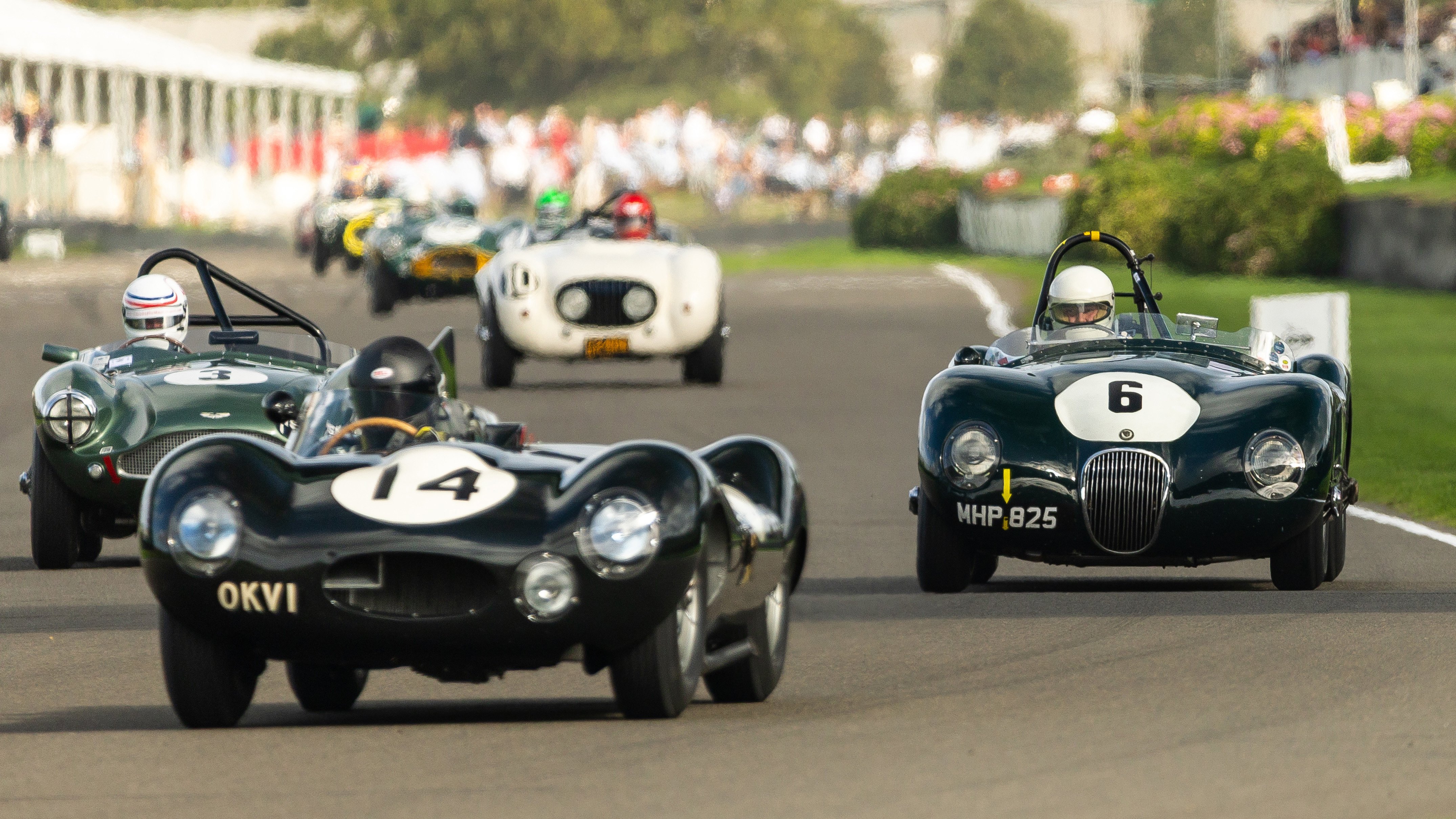
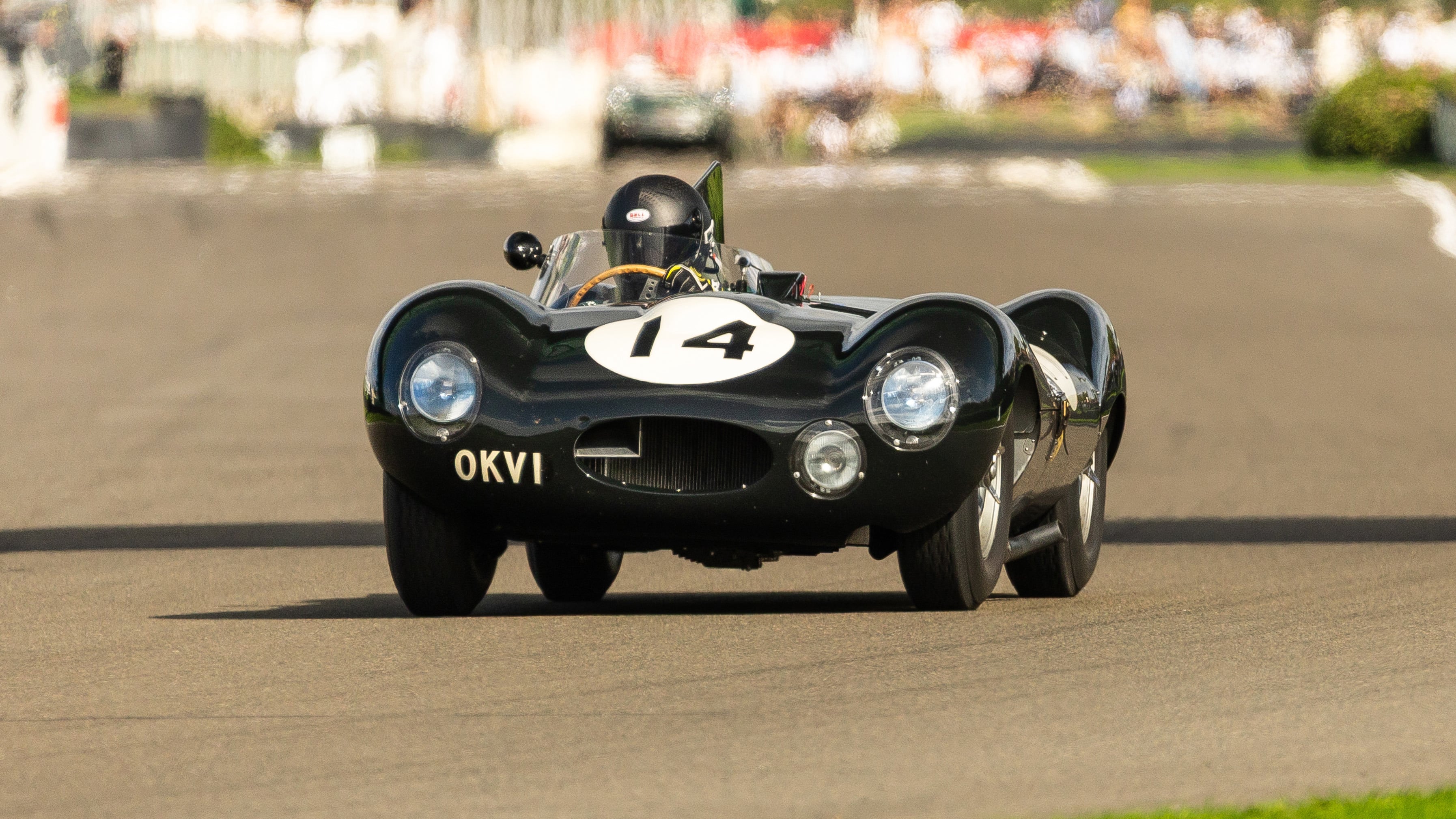
In the autumn daylight, a sleek, black silhouette cut through the chicane at the Goodwood Motor Circuit. The legendary 1954 works Jaguar D-type, chassis OKV 1, was one of the first D-types ever produced, and at the 2026 Revival presented by Dunlop its presence served as a rolling monument to the exact moment aviation science reshaped motorsport forever.
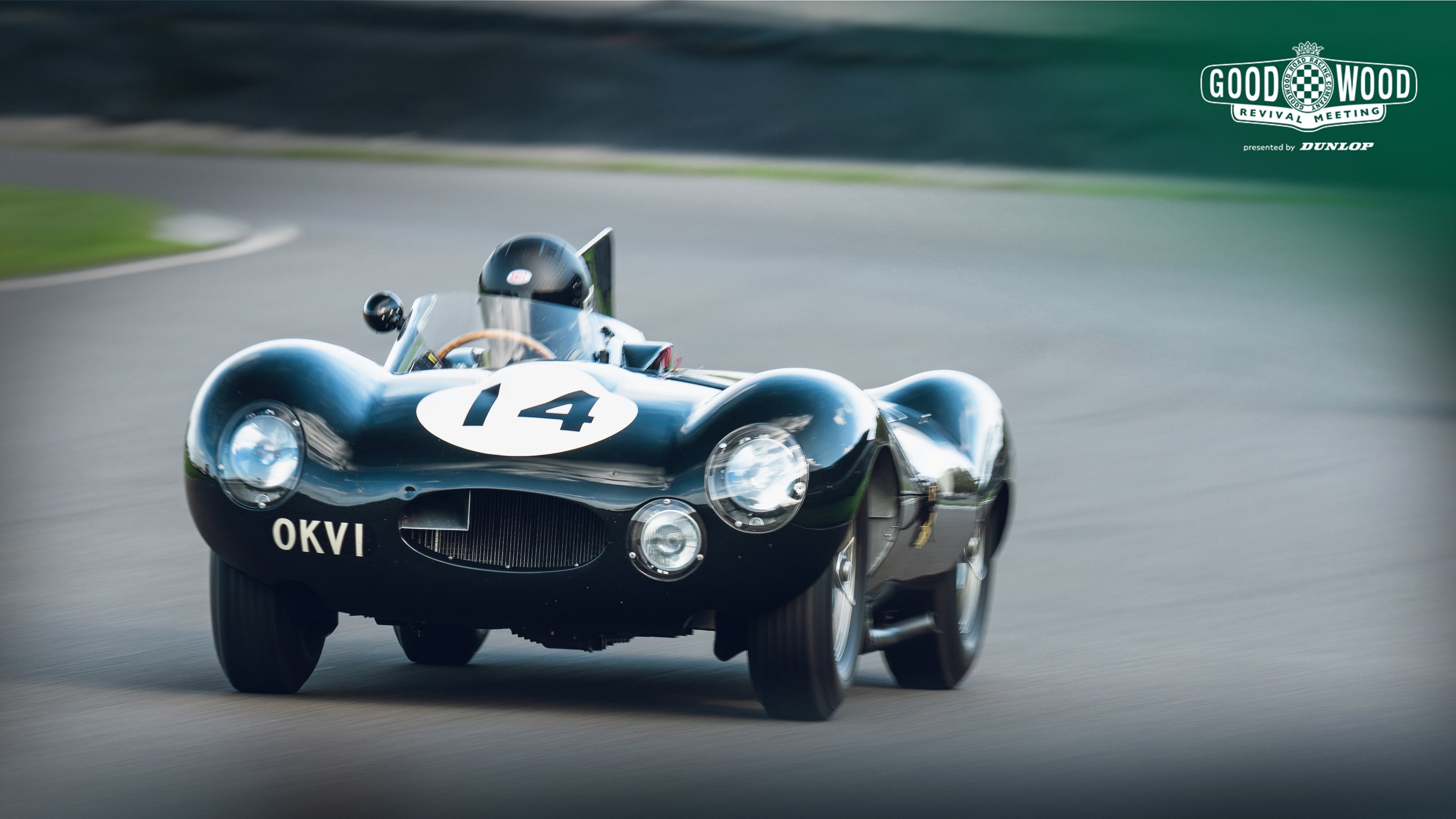
When Jaguar set out to conquer the racing world in the 1950s, it turned to Malcolm Sayer who, much like our West Sussex circuit, had a background in aviation. Sayer had spent the war engineering aircraft, and he brought a cold, mathematical precision to the Coventry factory that had a lasting influence automotive design.
Sayer famously loathed the term "stylist", fiercely maintaining that he was an aerodynamicist, not a “hairdresser”. Borrowing directly from his wartime expertise, Sayer introduced a slippery magnesium-alloy bodywork to Jaguar’s designs, crowned by an iconic vertical stabiliser fin added to keep the car tracking straight at terrifying speeds down the Mulsanne Straight. Beneath the skin lay an even greater aviation revolution: a radically new, lightweight monocoque central ‘tub’ with front and rear tubular subframes instead of the traditional spaceframe.
And when this aircraft-style chassis was paired with Jaguar’s straight-six XK engine, the prototype exceeded all expectations, clocking 178 mph — nearly 30 mph faster than the C-type. To stop this aerospace-grade weapon, Jaguar utilised Dunlop aircraft disc-brake technology, creating a machine defined entirely by aeronautical science.
Armed with this stopping power and aerodynamic supremacy, the D-type rapidly expanded its global footprint, evolving from a factory works weapon into the preferred mount for elite privateers, but the ultimate test of Sayer’s vision would come at the 1954 Le Mans.
Jaguar debuted a formidable three-car factory entry, spearheaded by OKV 1, but the race quickly turned into a mechanical nightmare for the team as persistent fuel-feed starvation choked the engines.
Heartbreak soon followed for the sister cars, as OKV 2 — driven by Stirling Moss and Peter Walker — was sidelined by terminal brake issues, while OKV 3 forced a retirement for driven by Peter Whitehead and Ken Wharton after a gearbox failure. With its companions out of the running, OKV 1 was left entirely alone as the sole surviving Jaguar.
What followed was an astonishing war against the brutal 5.0-litre V12 Ferrari 375 Plus. Driven by Duncan Hamilton and Tony Rolt, the sole D-type became the ultimate underdog in a classic clash of pure muscle versus aerodynamic genius. Down the Mulsanne Straight, despite giving away massive engine displacement to the Italian giant, Sayer’s slipstreamed design allowed the D-type to slice through the air at 172.8mph, completely outrunning the Ferrari’s top speed of 160.1 mph.
When the chequered flag eventually fell, OKV 1 had worked to secure an historic second place, finishing less than a single lap behind the winning Ferrari. It marked the closest, most dramatic finish at Le Mans since 1933.
OKV 1’s heroic performance provided the vital proof-of-concept for the Coventry outfit. It proved that Sayer's mathematical, aircraft-first philosophy was the definitive future of endurance racing. Just weeks after Le Mans, the car vindicated its engineering by capturing second place at the Reims 12 Hours. By then, Duncan Hamilton had fallen deeply in love with the machine and ended up purchasing OKV 1 directly from Jaguar, successfully campaigning the sleek black racer as a privateer.
This D-type provided the evolutionary blueprint that sparked Jaguar’s legendary Le Mans hat-trick: the 1955 works victory, followed by the iconic Ecurie Ecosse triumphs in 1956 and 1957.
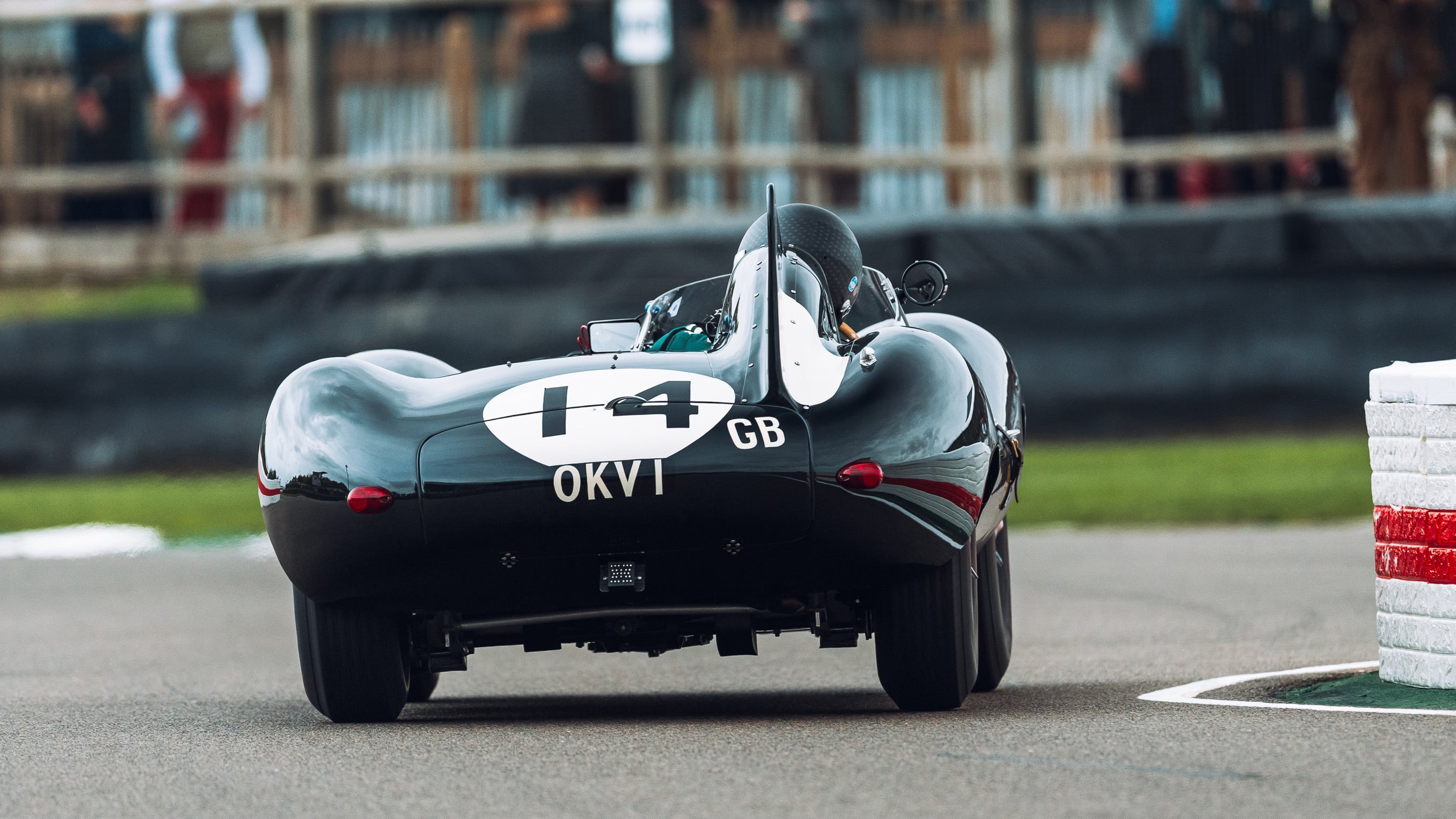
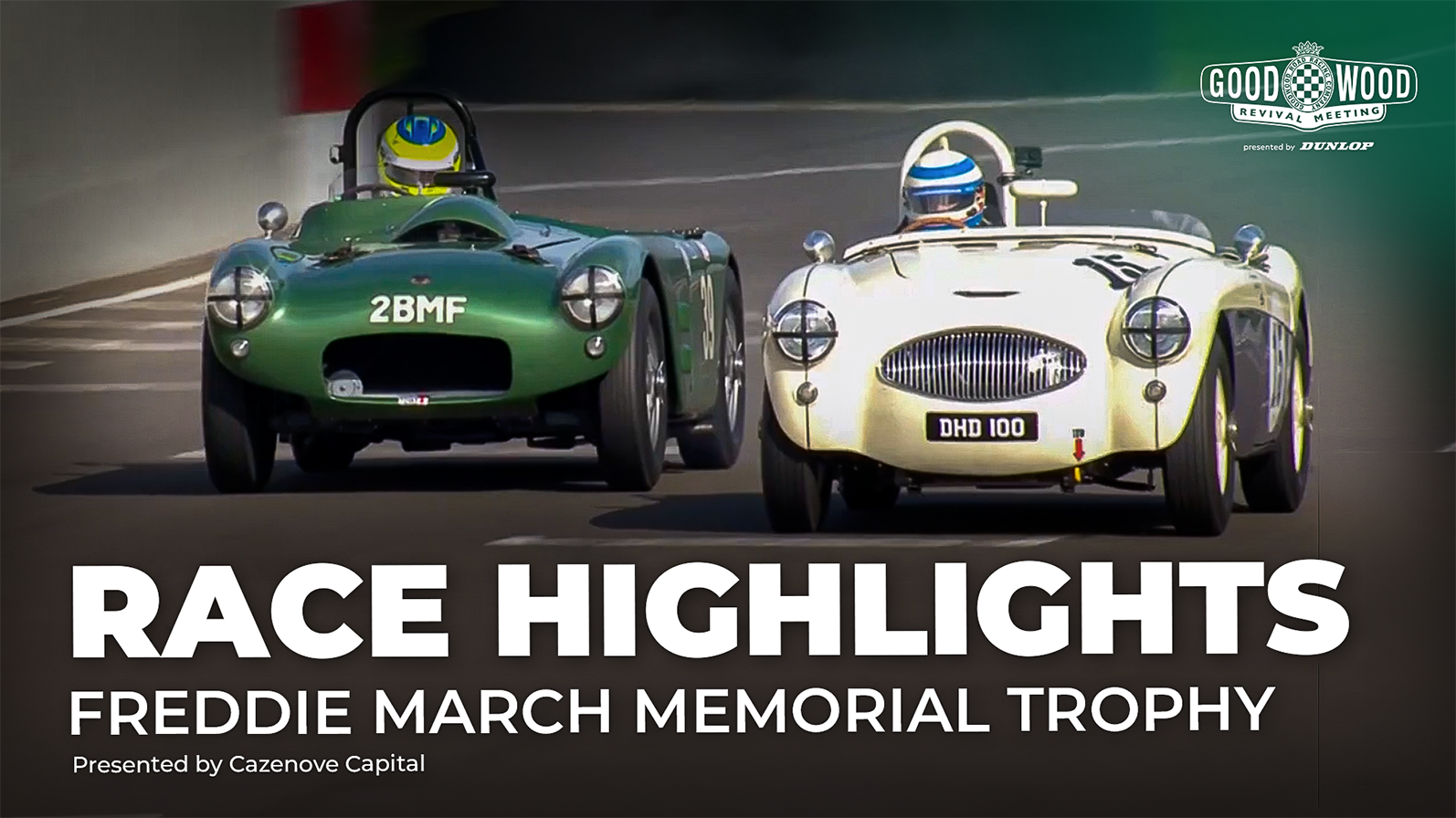
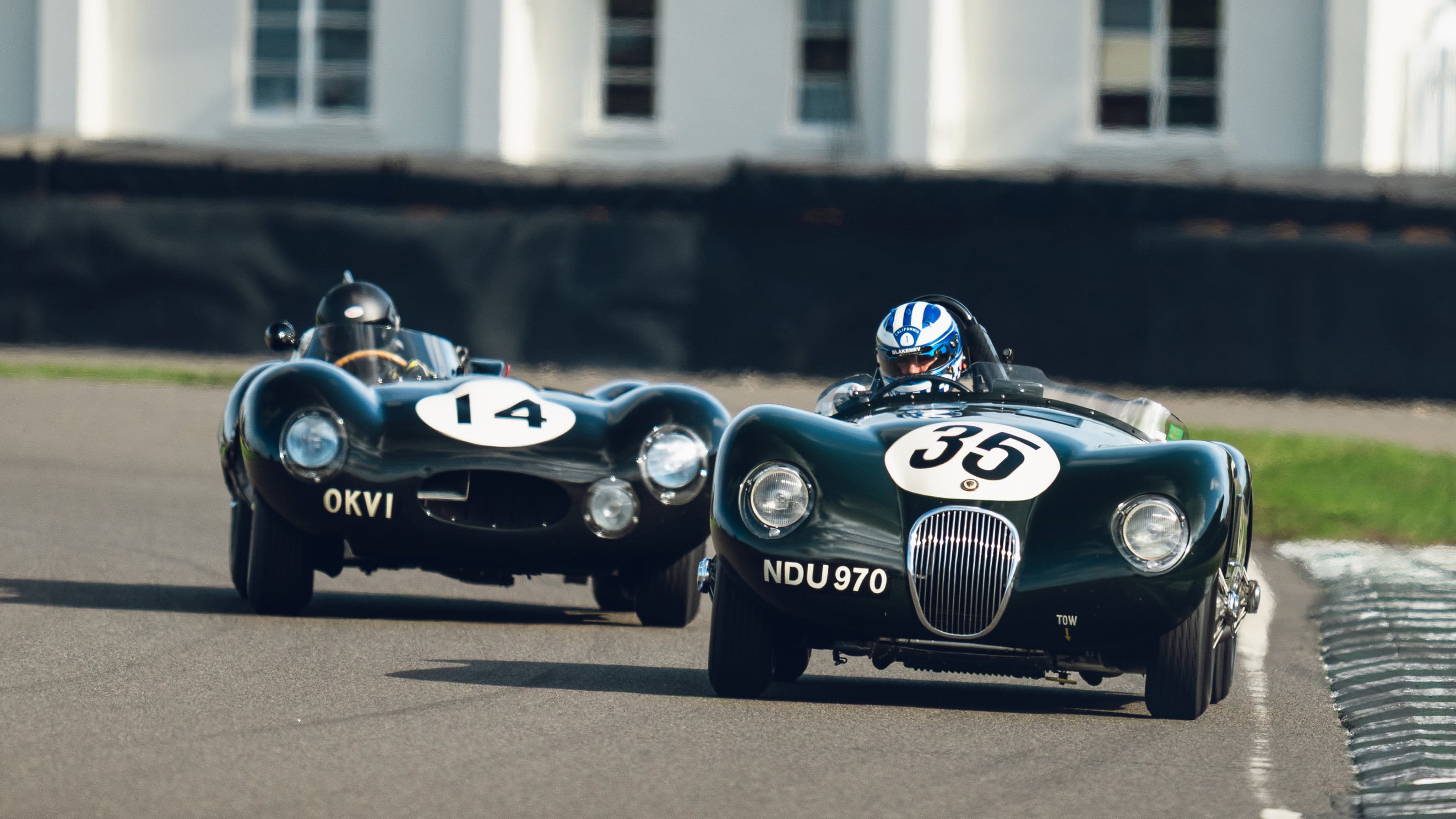
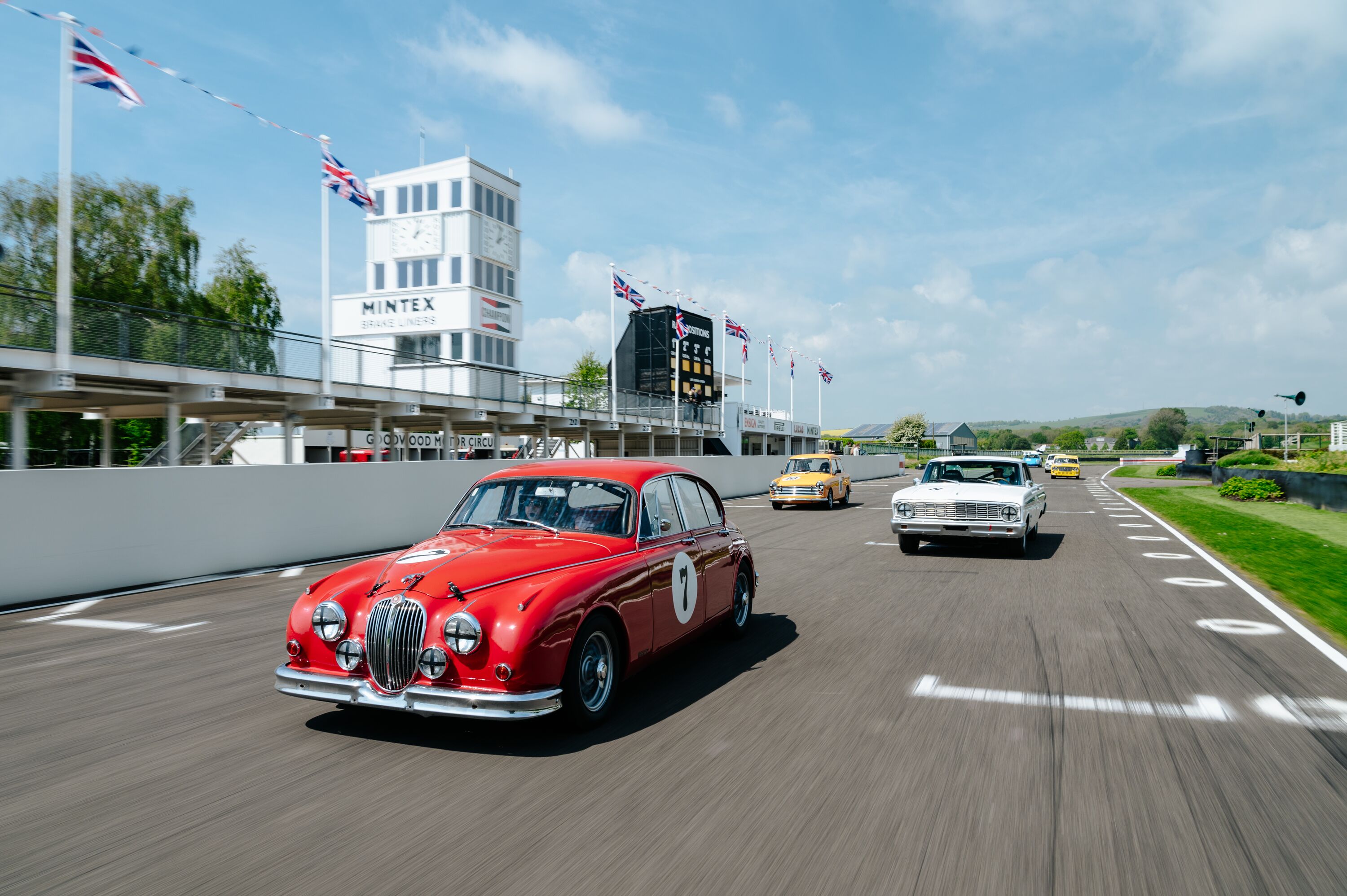
It was spectacular to see OKV 1 gliding down the Lavant Straight at the Goodwood Revival, an intersection of wartime aviation necessity and motorsport evolution still alive today. Andreas Halusa was the man at the wheel for the 2026 Freddie March Memorial Trophy presented by Cazenove Capital, and in a race full of Jaguar C-types he drove this lone D-type of eighth out of 20 finishers.
But more than the result, and far more than just a beautiful vintage racer, OKV 1’s presence at the Revival represented an unbreakable underdog whose creation laid the foundations of a Le Mans dynasty.
Main image photography by Jordan Butters.
The 2027 Goodwood Revival will take place on 17th-19th September 2027. Sign up for ticket alerts to make sure you don’t miss out.
If you’re not already part of the GRRC, you can sign up to the Fellowship today to save ten per cent on your 2027 tickets and grandstand passes, as well as enjoying a whole host of other on-event perks.
revival
revival 2026
event coverage
jaguar
D-Type
OKV1
Freddie March Memorial Trophy
Freddie March Memorial Trophy feature
Subscribe to Goodwood Road & Racing
Thank you, you’re now subscribed

How many hay bales are used at FOS?
For the last two years, 5,800 bales have been recylced into the biomass energy centre to be used for energy generation