

































































































In Memoriam
A century has passed since the tragic death of Charles, Lord Settrington. Goodwood’s Curator recalls a life full of laughter and promise, cut short in its prime.
Words by James Peill
goodwood newsletter
Goodwood news
Goodwood Magazine
Goodwood Estate
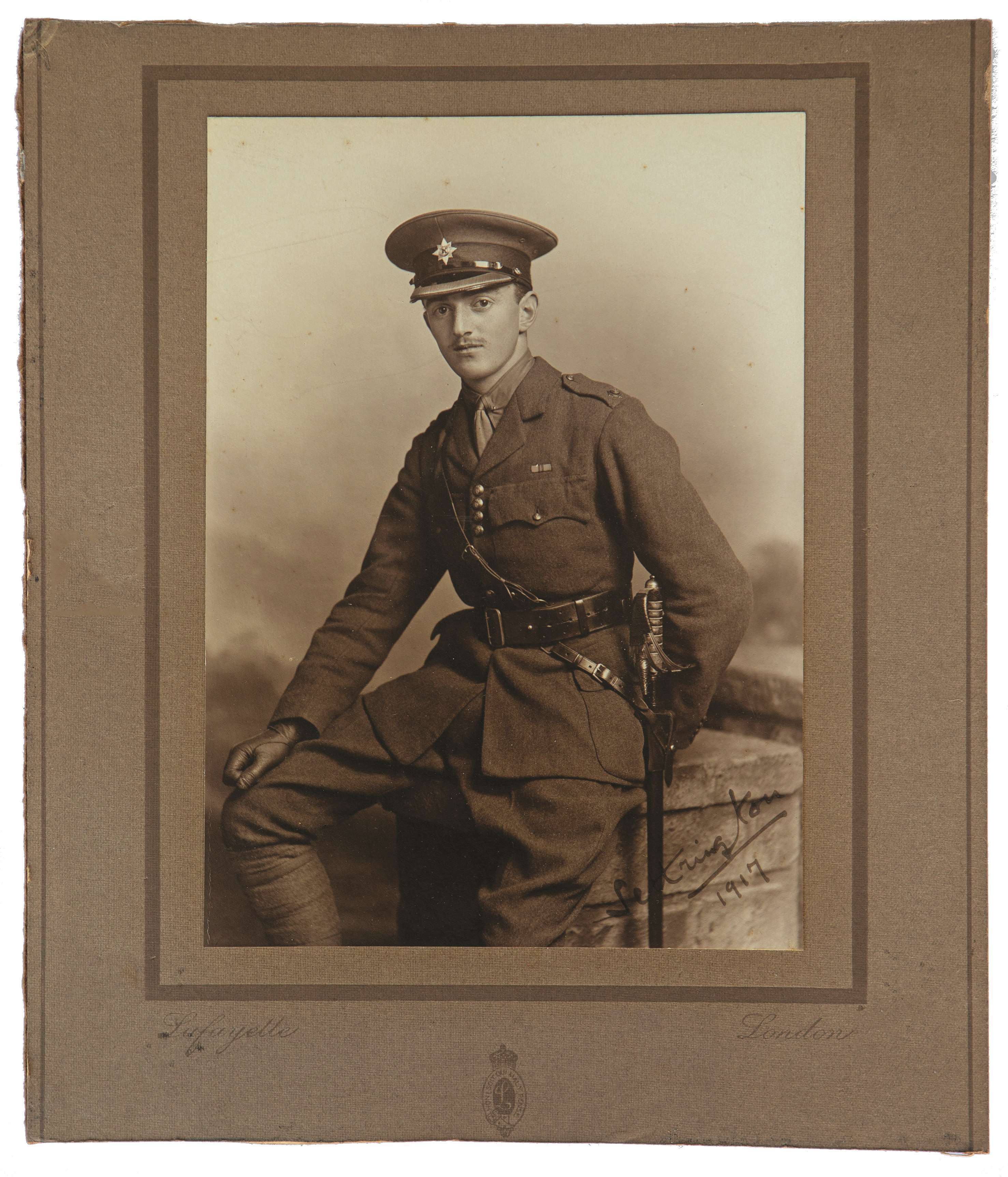
On 26 January 1899, Hilda, Countess of March, gave birth to a healthy baby boy who was christened Charles. There was much rejoicing in the Richmond family as he was the longed-for heir who would one day succeed his grandfather and father as Duke of Richmond. For Hilda, a strong-willed woman who was not afraid to speak her mind, it had been a long wait. Three years earlier, she had given birth prematurely to a boy who had died tragically a few weeks later. Hilda blamed her father-in-law, the 7th Duke of Richmond, claiming the premature birth had been caused by a row she had had with him over her husband’s career. The relationship never fully recovered. Perhaps because of this background, Charlie – as he was known – was the apple of his mother’s eye and could do no wrong. He enjoyed a happy childhood spent at Molecomb, the house on the Goodwood Estate where his parents lived. He and his younger brother, Freddie, shared a love of all things mechanical, with Charlie sending copies of The Motor Cycle magazine to Freddie at school. Idyllic summers were spent in Scotland participating inthe many field sports on offer (he caught his first salmon aged 11) and roaming over the wild hills.


However, this bucolic scene of happiness was not to last. The growing horrors of the First World War cast a shadow over Charlie’s final years at Eton. On leaving school, he joined the army and went straight to Sandhurst, where he remained until he joined his regiment, the Irish Guards, at the end of October 1916. Being stationed in Essex, he was able to drive up to London for the evening in his Morgan three-wheeler motor car and enjoy some of the nightlife. The lure of the pretty chorus girls on the stage proved irresistible and Charlie would often enlist the help of the liftman at the relevant theatre. His girlfriends included Joyce Barbour and Faith Celli who both became wellknown actresses. Freddie remembered Charlie smuggling Faith into his parents’ London house late at night, after the theatre, with only his sister Doris in the know. Had Hilda found out, she would have been horrified, as it was frowned upon for members of the upper class to step out with actresses. On one occasion, when Freddie expressed horror that Charlie and Faith were caught in the capital during a Zeppelin raid, Charlie remarked, “Not at all – it was lovely. Faith clung so beautifully!”
In the spring of 1918, the 19-year-old Charlie went off to war. He had hardly been in France for two weeks before his company took the full brunt of the German Spring Offensive and Charlie ended up as a prisoner of war at Karlsruhe in Germany.
Freddie remembered Charlie smuggling Faith into his parents’ London house late at night, after the theatre, with only his sister Doris in the know.
After the Armistice, Charlie returned home to a hero’s welcome in time for Christmas 1918. On Christmas morning, the plan was that everyone would attend the 8am Holy Communion service at Boxgrove. Unfortunately, Charlie overslept and missed his lift. Grabbing one of the housemaid’s bicycles, he pedalled furiously along a back route until his way was blocked by some heavily padlocked doors in the wall at the Home Farm. Throwing the bicycle over the wall, he made swift work of climbing over, only to discover that he had buckled the front wheel. Realising there was not enough time to make his divine appointment, he returned home defeated. Missing church was the least of his worries. How would he explain his absence to Hilda, who was looking forward to showing off her hero son to the entire congregation? “Darling!” she exclaimed in a funereal tone, “you have broken my heart.” To which he replied, “Well, I don’t know about your heart, but I’ve certainly broken the housemaid’s bicycle.”
Well, I don’t know about your heart, but I’ve certainly broken the housemaid’s bicycle
Peacetime life in the army did not suit Charlie. He was bored and toyed with the idea of joining the newly formed Royal Air Force. Shortly after his Christmas leave, he was seconded from the Irish Guards to do a course in Wireless Telegraphy at the Army Signals School, where he did very well. Always at the back of his mind was a nagging sense of guilt that he had done nothing in the war and had somehow failed by being taken a prisoner of war. Finally, a chance meeting with an ex-army pal set his career off in a new direction. He heard that the army was looking for a new brigade signals officer to accompany the Royal Fusiliers to the remote Russian city of Archangel. They were to be part of the Allied Intervention in Russia, supporting the White Russians in their fight against the Bolsheviks. Charlie leapt at the opportunity.
In late May 1919, Freddie was allowed out of school to see his elder brother off from London. The memory of that departure was to remain forever in Freddie’s memory: “I last saw brother Charles, serenely happy in the open back of a Landaulet taxi, leaving that entrance eating strawberries from a punnet we had bought off a street seller. Exit my hero, my guide.”
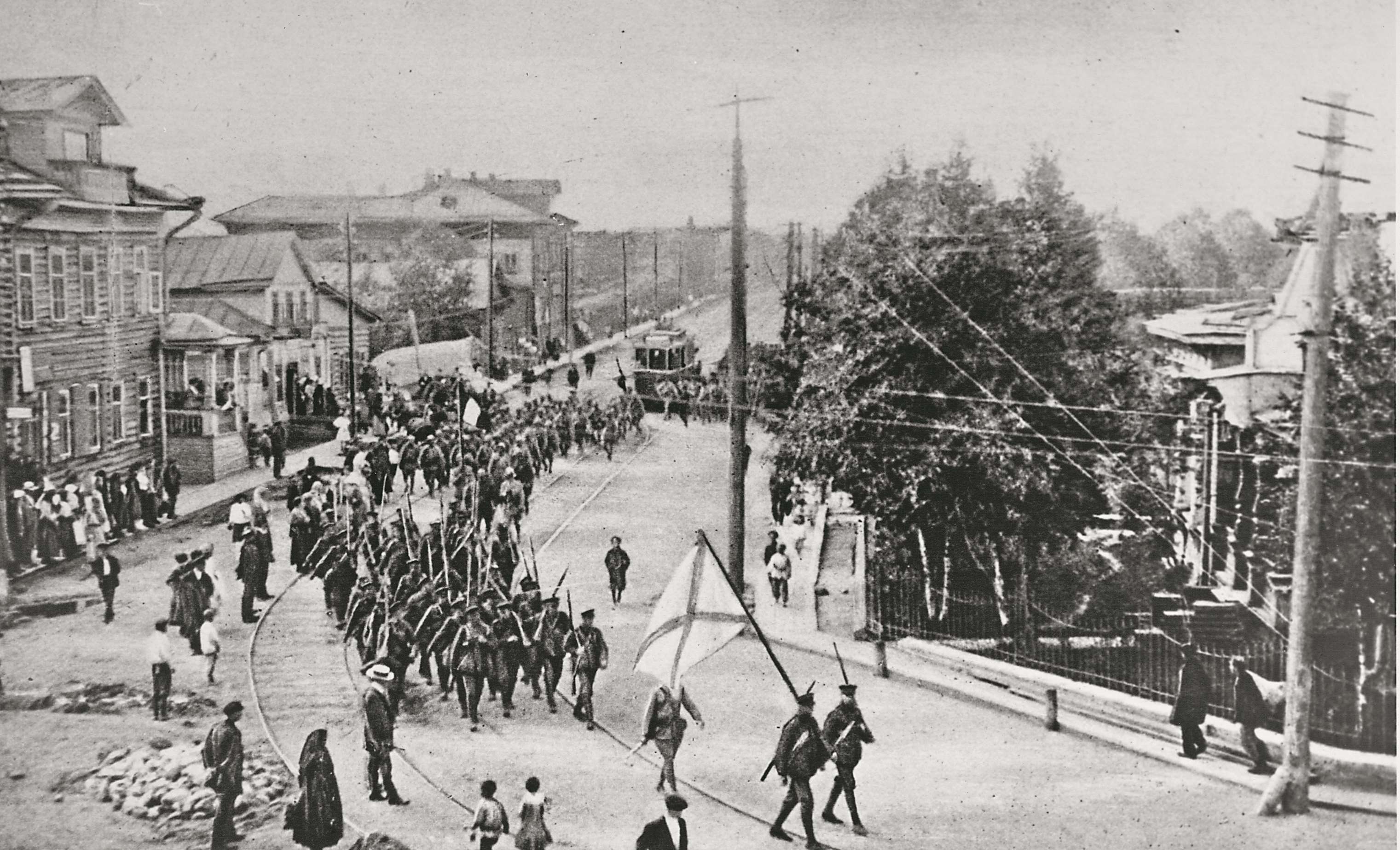
White Russian soldiers march through an occupied city on a recruitment drive to gainmore troops for their fight against the Bolsheviks
Among the other young officers who had volunteered to serve with the Royal Fusiliers in the conflict was Lieutenant Alister Pearse. Like Charlie, he had gone straight to Sandhurst from school and then served with the Middlesex Regiment in France, where he was awarded the Military Cross. Both Charlie and Alister were attached to the 45th Battalion, Royal Fusiliers.
Later that August, the 45th Battalion arrived at the Dvina front in northern Russia. The battalion was there to relieve the original 1918 expeditionary force and that day launched an attack to aid their final evacuation. During the attack, Charlie’s platoon – who had been fighting a rear-guard action – had become cut off. Now they were desperately trying to make their way back to the British lines. As they ran full-tilt, dodging bullets, they came to a precarious bridge of planks across the swamp. There was no alternative but to cross it, leaving them even more vulnerable to the constant gunfire. In less than no time, Charlie and three others fell into the deep swamp of the Sheika river, either hit or trying to avoid being hit.
Not wasting a second, Corporal Arthur Sullivan dived in after them. Despite the incessant gunfire, he hauled Charlie to safety and then did the same thing for the three others, thereby saving their lives. Charlie had been badly wounded in the stomach by machine-gun fire and half of his right hand had been shot off.
The army was looking for an officer to accompany the Royal Fusiliers to the remote city of Archangel, supporting the White Russians in their fight against the Bolsheviks. Charlie leapt at the opportunity
Only days before, Charlie had written to his father, jokily telling him: “I have at last discovered a swamp possessing some duck. Unfortunately, any systematic shooting over it is only interfered with by the fact that it is a portion of ‘No Man’s Land’. However, we hope to include it among our preserves before long. I wonder where the summer hols are being spent this year – also if you have any prospects of Scotland – I’d give all I have got (Phew!!) to be on the banks of the Blackwater at this moment instead of the Dvina – however, I do see prospects of being back before the leaves are off the trees. Love to all, Charlie.” Now, instead of fishing on the banks of the Blackwater, he was dying on the banks of Sheika, thousands of miles away.

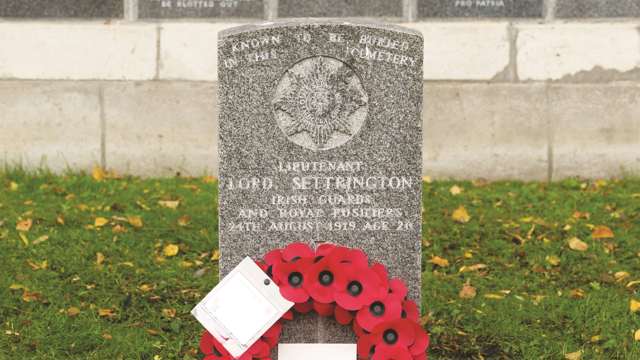
Charlie was rushed to a hospital barge. Despite the gravity of his wound, he was able to play chess and dictate letters home. But there were times when the pain became unbearable and, after some days, he sank into a coma from which he never recovered. On August 24, Charlie died. He was only 20 years old.
His body was taken to Archangel where he was given a military funeral and buried in the Allied Cemetery, according to his family’s wishes. On September 26, Corporal Sullivan, an Australian by birth, was awarded the Victoria Cross for his actions on that fateful August day.
Hilda took the news badly, trying to control her hysterical temperament. The telegram informing them of Charlie’s death had arrived at Gordon Castle on the eve of a huge gathering of the entire Scottish tenantry. In a supreme show of fortitude, Hilda’s father-in-law, the 7th Duke of Richmond, went through with the occasion and a letter from Hilda was read out. Her resilience in the face of adversity shines through: “Our loss is so great that for the moment we feel stunned, but we shall soon pull ourselves together and come out amongst everybody again.” Thereafter, she plunged herself into charity work.
Just over three weeks after Charlie had died, Alister Pearse was involved in the evacuation of Chamovo. Returning upriver, the barge he was aboard was subjected to machine-gun fire. Alister, asleep in the wheelhouse, was shot through the lung and leg. He was removed to a hospital barge where he died almost immediately. His body was sent to a monastery at Siskoe, and was buried with two others. He was 21 and had only recently been awarded a bar to his MC for leading a daring raid and capturing 170 prisoners.
On 24 August 2019, on the 100th anniversary of Charlie’s death, the Duke and Duchess of Richmond travelled with three of their children to Archangel. I accompanied them, not just in my role as Curator of Goodwood, but for more personal reasons. Earlier this year, while looking through my great-grandmother’s writing case, I made the most surprising discovery – the death notice of a young family member. His name: Alister Pearse, my grandfather’s first cousin. Despite having worked at Goodwood for 10 years, I had no idea of this coincidence, a sad intertwining of our families’ lives a century earlier. Together, we stood at Charlie’s grave in Archangel and held a small service of remembrance. We said prayers and sprinkled earth from Goodwood and holy water, before laying wreaths. Nearby, in the same cemetery, I laid a wreath by Alister’s memorial.
We then walked from the well-tended cemetery to the Russian Orthodox Church nearby. The beautiful chants of a four-part choir resonated around the church and our guide informed us it was a service for the memory of the dead. As we lit candles in memory of our relatives, it seemed we were meant to be there.
This article was taken from the Winter 2019/2020 edition of the Goodwood Magazine.
goodwood newsletter
Goodwood news
Goodwood Magazine
Goodwood Estate