


































































Speed racers
NASCAR has transformed US stock car racing from its lawless, moonshine-running roots into a billion-dollar industry... with the help of an epic trackside dust-up between drivers.
Words by Liz Clarke
goodwood magazine
goodwood estate
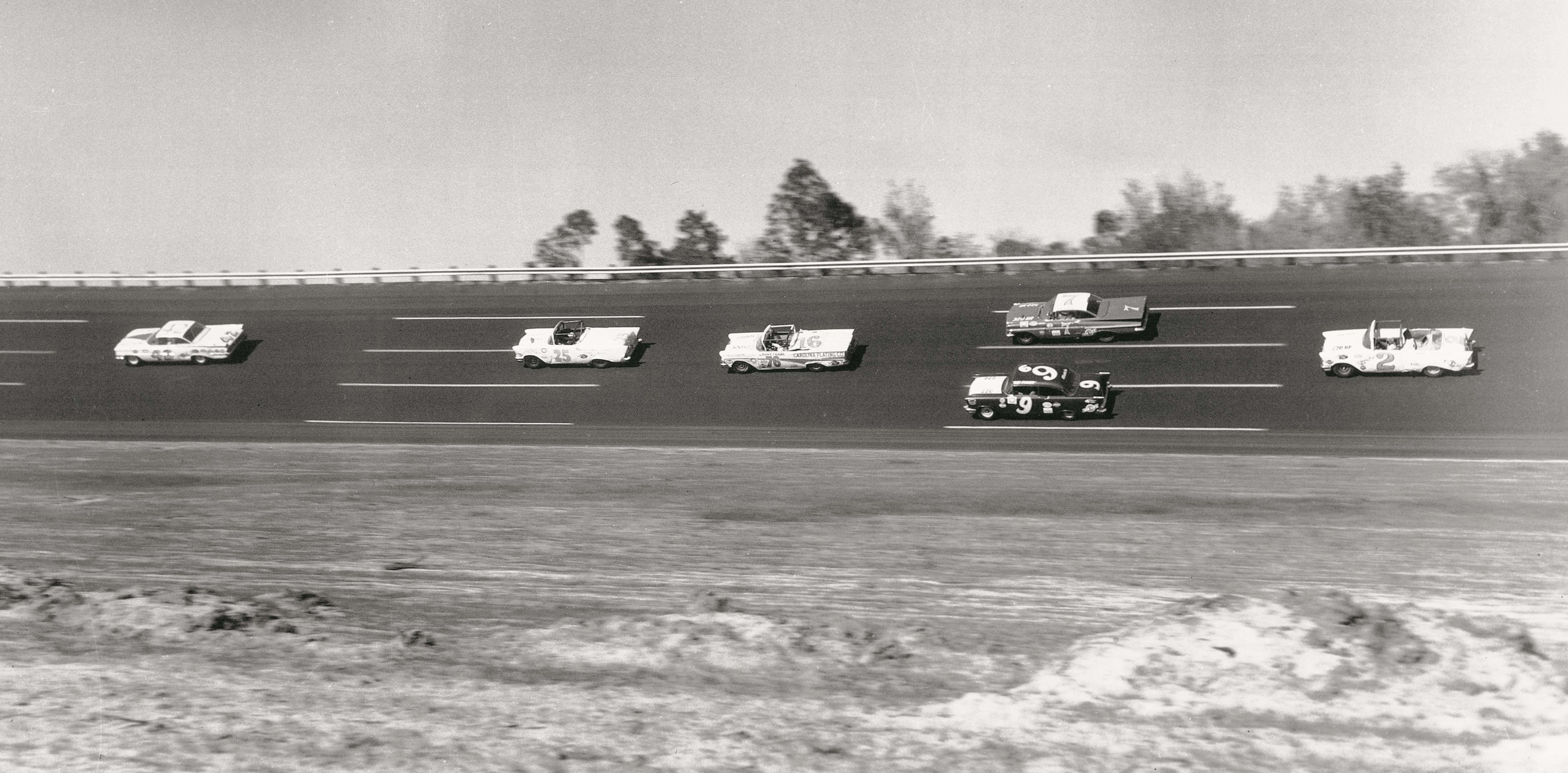
IT WAS THE GREAT FORTUNE of NASCAR founder Bill France that a snowstorm blanketed much of the northeastern US the weekend of the 1979 Daytona 500. The upshot of this – on the occasion of the first live, flag-to-flag broadcast of a NASCAR race on national network TV – was that a largerthan-expected audience got a riveting dose of the highoctane, fender-banging, hell-raising brand of stock-car racing that had until then been primarily a Southern phenomenon.
Just 32 laps into the 200-lap race around Daytona International Speedway’s steeply banked oval, hard-nosed driver Cale Yarborough tangled with brothers Bobby and Donnie Allison. Tempers flared, but all three cars motored on. On the last lap, Donnie led and ducked low to fend off a slingshot pass by Yarborough. Instead of backing off or darting high, Yarborough rammed his bumper, sending both cars spinning onto the infield grass while Richard Petty, running a distant third, sailed by for the victory. The melee, however, was just getting started. As CBS TV cameras rolled, Bobby Allison leapt from his car and ran to check on his brother; then a brawl began between Yarborough and the brothers.
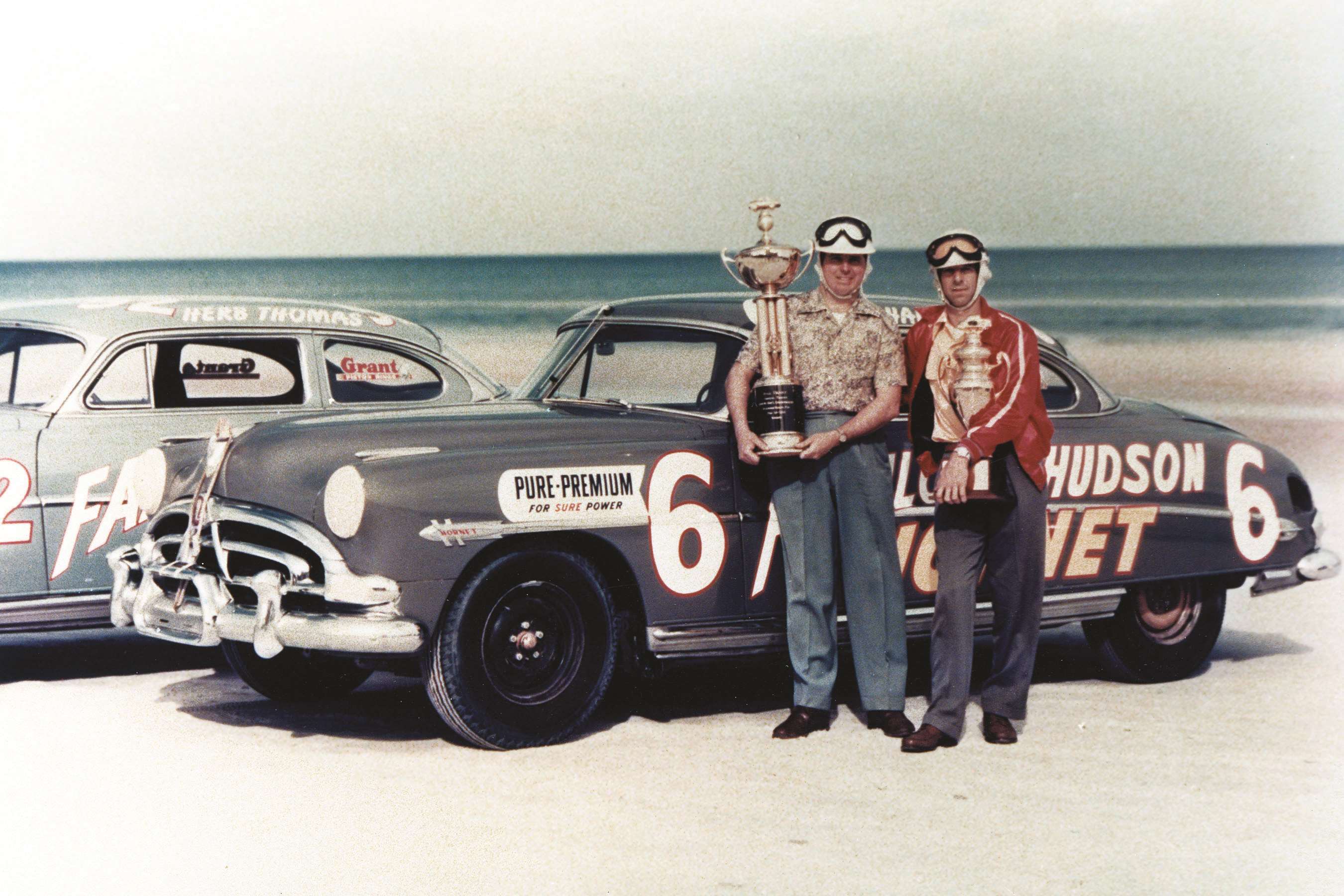
Drivers Marshall Teague and Herb Thomas pose at the Daytona Beach-Road Course in 1952
The fracas landed NASCAR on the front page of the New York Times sports section. And the lesson for France and the marketing wizards at RJ Reynolds Tobacco Company – who bankrolled the competition as title sponsor of NASCAR’s Winston Cup Series – was that publicity was good for the sport, and controversy even better. Indeed, that wild finish to the 1979 Daytona 500 marked the beginning of a remarkable growth spurt for a humble sport that grew out of the dirt of the American South to become the most popular form of auto racing in the United States, fuelled by fierce rivalries and the visceral thrill for the crowd of watching close-quarters racing at 200mph – with its own distinctive, no-holds-barred appeal, dramatically different in both look and sound to Formula 1.
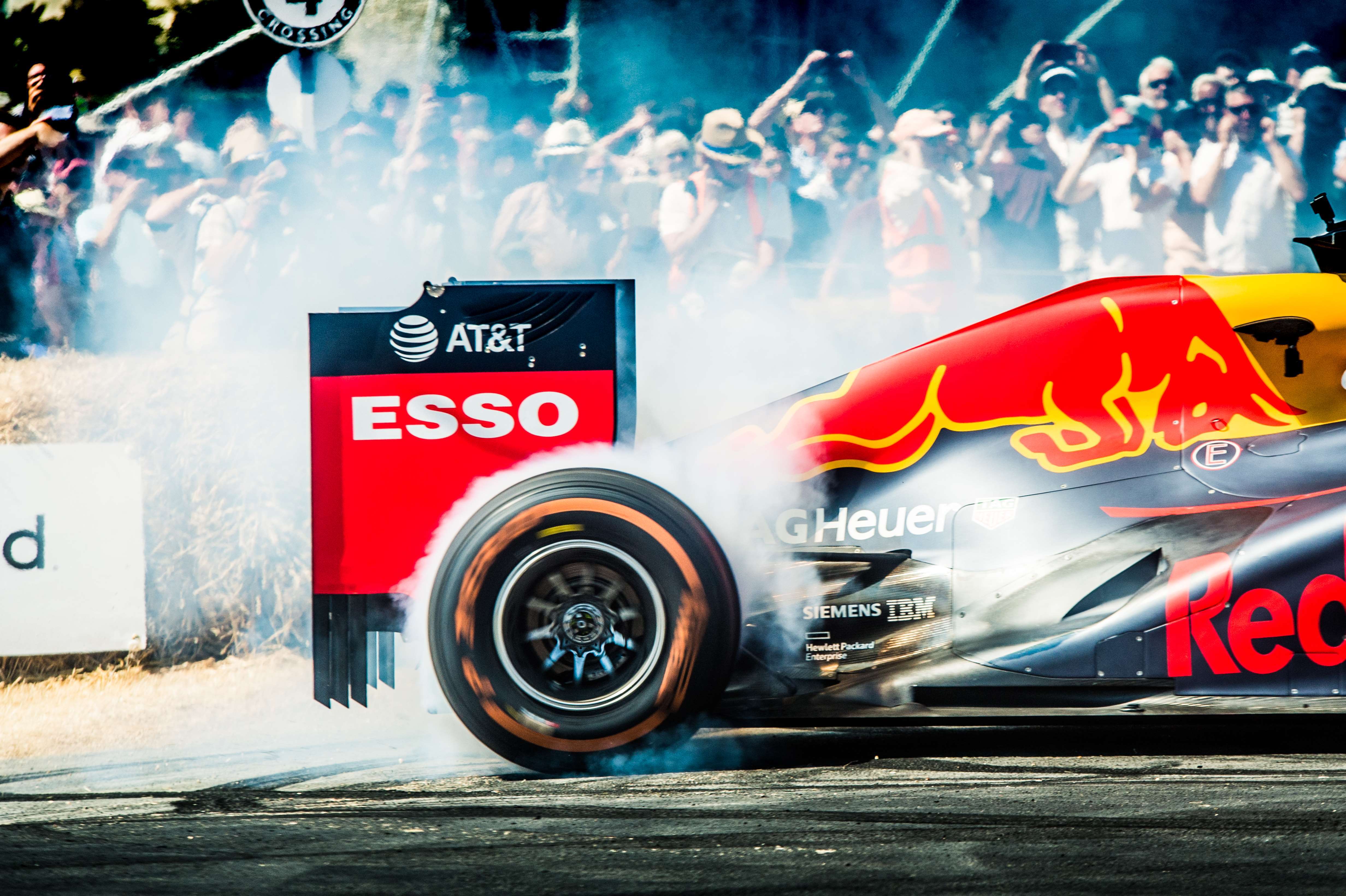
Formula 1 cars are aerodynamic, high-tech marvels with high-pitched engines that sound like a swarm of wasps, especially when overtaking. Yet overtaking is difficult, contact is rare – and typically calamitous. NASCAR’s stock cars, by contrast, are hulking, ungainly faux-sedans that weigh more than twice as much and are powered by V8 engines (as opposed to F1’s V6), which emit a deafening, deep-throated roar. Equipped with bumpers, stock cars are designed to run nose-to-tail and withstand contact, whether it’s a nudge to the rear or a side-by-side jostle along those steep banks – whatever is required to pull off a crowd-pleasing pass.
That race woke everyone up. It was exciting for because we won it, and it was exciting for the fans because they got to see a big brawl. It was the perfect storm for us to take things to the next level.
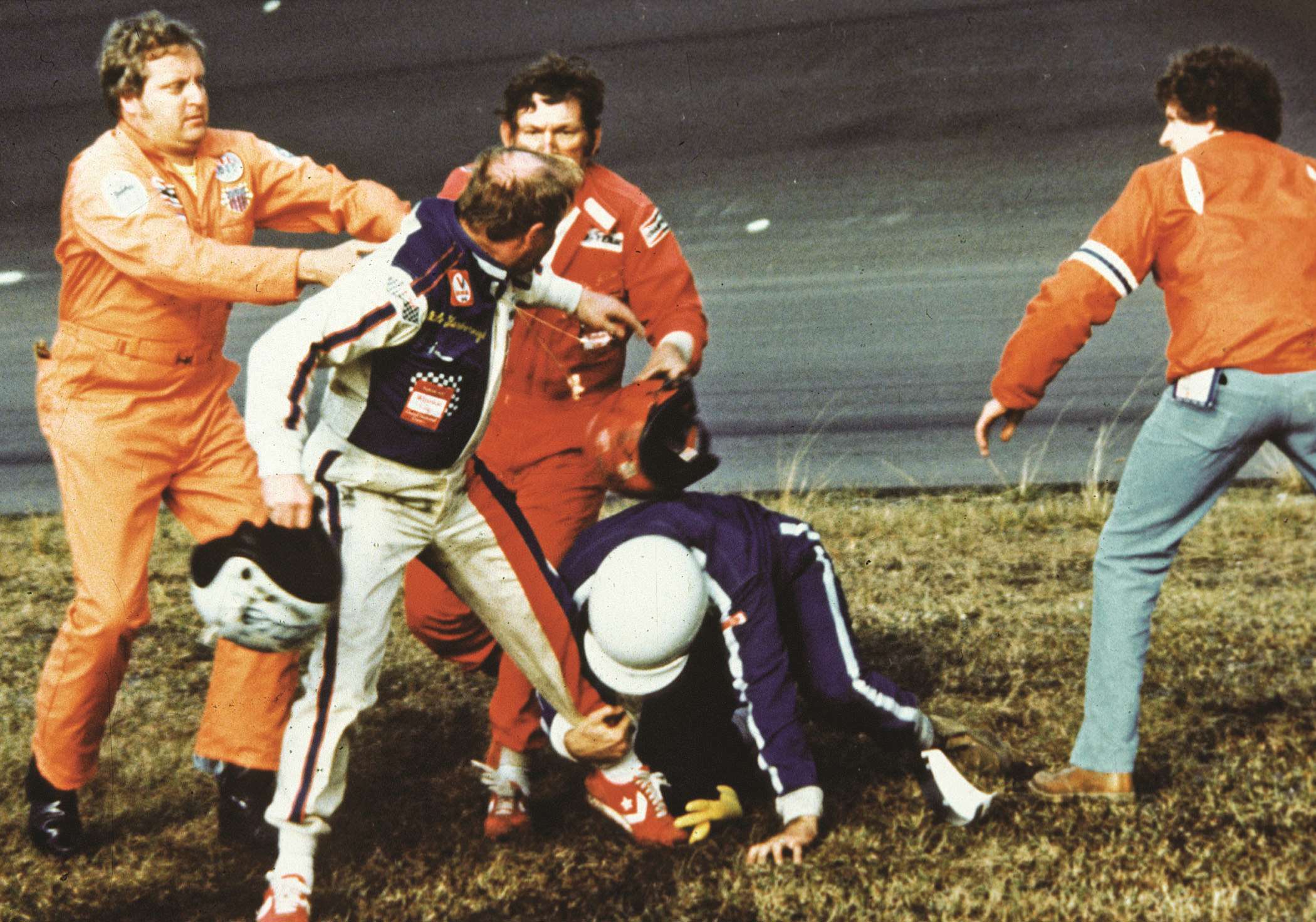
The notorious fight between Cale Yarborough, Donnie Allison and Bobby Allison at the 1979 Daytona 500
Richard Petty, who is now 81, and who went on to win seven NASCAR championships and a record 200 races during his career, is clear about the lasting impact of the notorious 1979 Daytona 500: “That race woke everyone up. It was exciting for us because we won it, and it was exciting for the fans because they got to see a big brawl. It was the perfect storm – the perfect storm for us to take things to the next level.”
By the time the third generation of the NASCAR-founding France dynasty took over, top drivers were millionaires who hopped from one race to the next in private jets, and track owners were adding grandstands as fast as the concrete would set. But NASCAR’s rise was entwined with the American love affair with the automobile that blossomed in the decades of prosperity following World War II. And its roots can be traced further back in time – to the wave of Scots-Irish immigrants who had settled in the mountains and hollows that formed a spine through western Virginia, North and South Carolina and Georgia. Many brought with them a tradition of making home-distilled liquor from sugar and surplus corn, which they handed down through generations. They also passed down a deep distrust of government and a disdain for paying taxes on the homemade whiskey that served as liquid currency, even after Prohibition had been repealed, through the lean times of the 1930s and ’40s. So a new profession was born, “moonshine running”, in which brave young men who’d figured out how to wring extra horsepower from a Ford V8 delivered contraband by outrunning the taxmen chasing them over backroads, with the light of the moon their only guide.
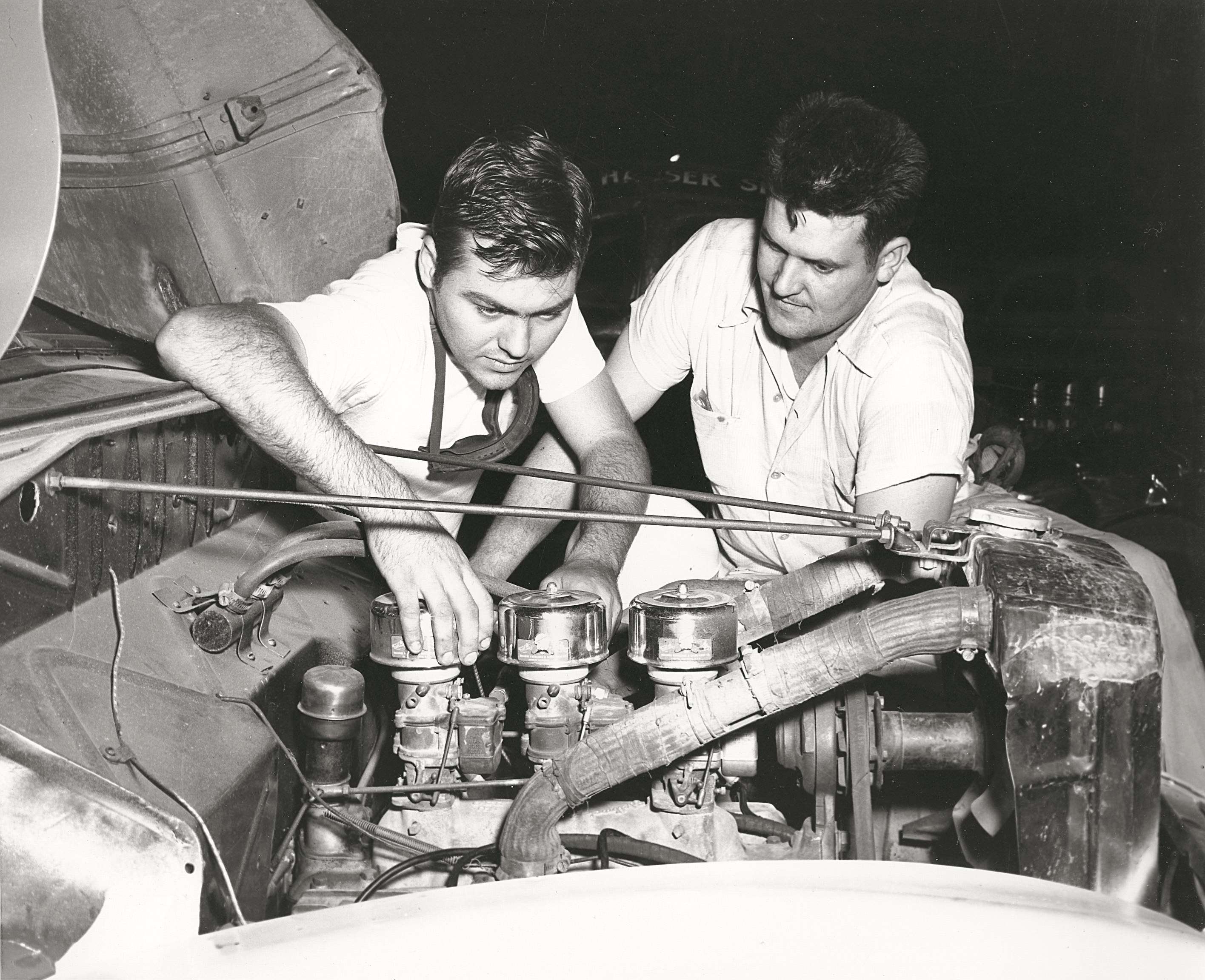
Junior Johnson, left, helps tune a souped-up car used to deliver moonshine
Junior Johnson soon became a local legend for his moonshine-running exploits through the North Carolina hills. His automotive smarts and daring behind the wheel translated well to the local dirt-track circuit, where drivers raced on weekend nights on tight oval tracks carved with bulldozers out of the red clay. Johnson, who is now 88, went on to win 50 NASCAR races as a driver and field front-running cars as a team owner. And there were scores of hellions just like him throughout the South, with as much personality as nerve, whom locals would happily pay to watch race.
As NASCAR grew in the 1960s and ’70s, the biggest attraction was Richard Petty, the son of three-time champion Lee Petty. Everywhere he raced, Petty would tow his No 43 Plymouth to the track, pull out his black pen and sign autographs until it was time to strap himself into the car. Afterwards, win or lose, he’d sign autographs for hours more. He knew that it was race fans who put bread on his family’s table. “If you go back to when I first started racing in 1959,” Petty recalls, “there was no sponsorship from the outside. If the fans didn’t buy tickets, the promoter couldn’t pay me. So when I talked to a fan it was my way of thanking them.”
The acronym NASCAR (the National Association for Stock Car Auto Racing) suggests that an impartial body owns and controls the sport. That’s not the case. It’s a family business, owned by the Frances of Daytona Beach, Florida, who also own many of the most important speedways on the presentday circuit. Bill France didn’t invent stock-car racing any more than he invented the automobile. His genius was in taming, controlling and promoting the unruly sport. A former gasstation owner turned race promoter, France was the driving force behind the 1948 meeting at which he convinced a group of the top racers, mechanics and track owners that stockcar racing was at a crossroads. To thrive, it needed rules, a governing body and a schedule with points and prize money. The group named France president of the new entity called NASCAR. Before long, he was the company’s sole shareholder.
There was no sponsorship from the outside. If the fans didn’t buy tickets, the promoter couldn’t pay me. So when I talked to a fan it was my way of thanking them
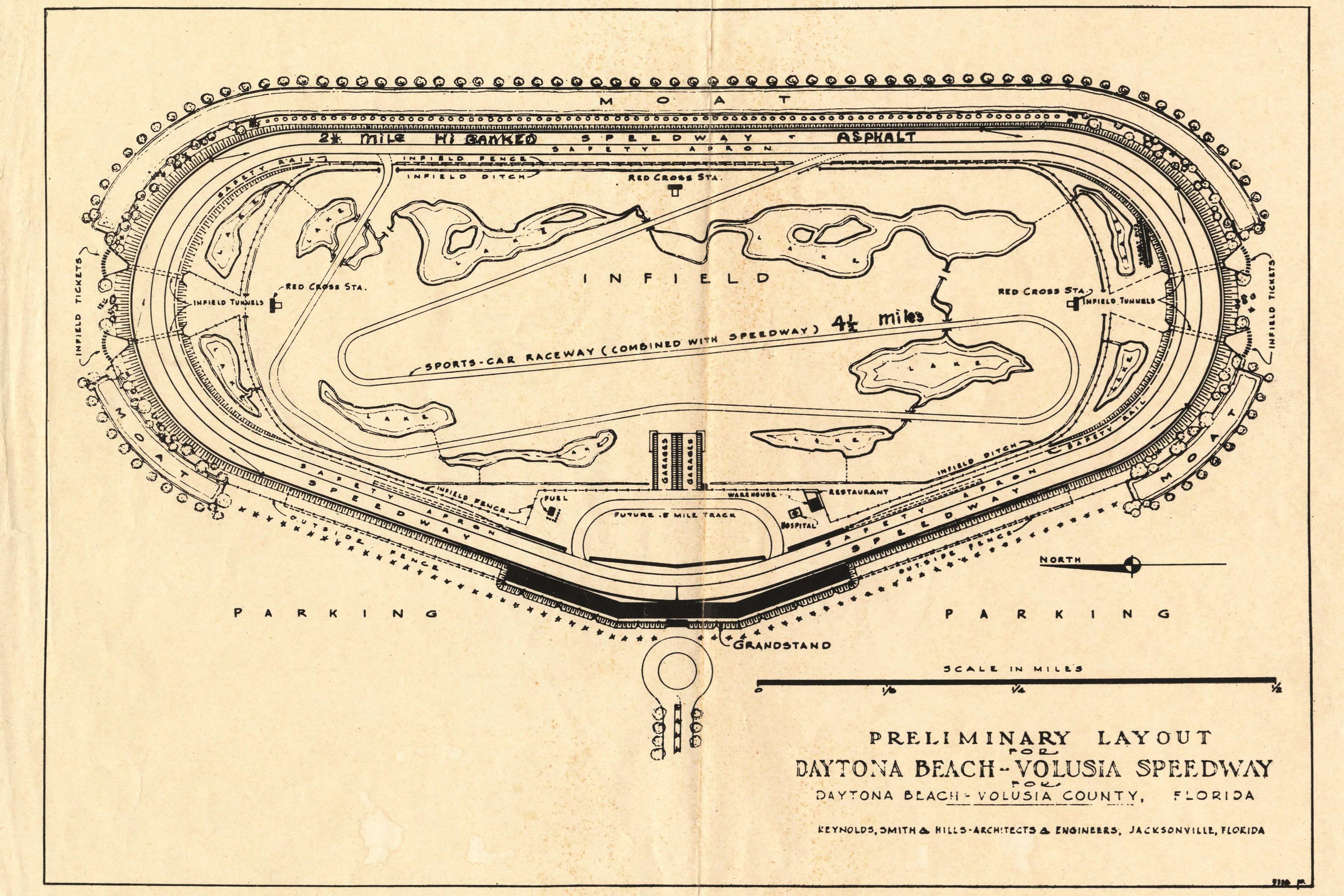
An imposing figure at 6’5”, France ruled NASCAR with an iron fist, settling disputes, quashing attempts by drivers to form a labour organisation and keeping track owners in line by controlling the season’s schedule. He dreamed big, building the 2.5-mile Daytona International Speedway as both a challenge and homage to Indianapolis Motor Speedway, the revered home of the Indianapolis 500 and the open-wheeled cars that at the time represented the height of automotive technology and glamour.
While France coveted the Indianapolis 500’s prestige, he had a distinctly different vision for NASCAR. He wasn’t interested in creating a rich man’s sport; he was determined to keep stock-racing a common man’s sport, which meant limiting technology. France’s vision of an Everyman’s automotive sport was rooted in two fundamental myths that would become increasingly strained over time: that the Fords, Chevrolets and Buicks on the track were no different to the sedans in the typical family garage, and that the drivers were no different to the average American.
The appeal to fans was clear: Junior Johnson, Richard Petty and Bobby Allison were regular people. They could be your neighbour. In fact, the subliminal message was that they could be you! Detroit’s automakers clamoured to subsidise NASCAR’s top drivers and teams, for as the marketing adage said: “What wins on Sunday sells on Monday.”
What wins on Sunday sells on Monday
But what transformed NASCAR into a billion-dollar business wasn’t simply fans’ fascination with cars or engines. It was their fascination with the drivers, who took their cue from Petty and understood the importance of putting on a show that was worth paying to see. NASCAR thrived on the cult of personality. Fans thronged to speedways, proclaiming their allegiance with T-shirts, caps, flags and beer-coolers emblazoned with the name of their favourite driver. Each time one beloved champion retired, another came along.
Jeff Gordon, the telegenic Californian with Hollywood looks and brilliant racing skills, brought a younger demographic and waves of female fans to NASCAR in the mid-1990s. His arrival dovetailed with NASCAR’s runaway growth and coast-to-coast expansion. National sponsors signed on, as did a handful of open-wheel racers who diversified the competitive ranks
Earnhardt was reviled as much as he was loved. But as long as fans came to cheer or boo, it was good for NASCAR
But none sold more tickets than the late Dale Earnhardt, whose black No 3 Chevrolet was as menacing as he was. It wasn’t that Earnhardt was universally loved; he was reviled in equal measure. But as long as fans came to cheer or boo, it was good for NASCAR. Born to humble, hard-working circumstances, Earnhardt had dropped out of school at the age of 15, wanting to race on North Carolina’s dirt tracks like his father. But after getting his girlfriend pregnant, he was a father at 18 and stuck in a dead-end job, pumping gas as the world raced past. Desperate to make a name in the sport, on the weekends he raced salvaged cars that he and his siblings built – wrecking them as often as not, and spending their weekdays banging out the dents and slipping deeper into debt. There was a fury in the way he raced, as if finishing second would send him back to that gas-station job. And he never lost that fury, even after he won his first Winston Cup championship and went on to tie Petty’s record seven, a millionaire many times over by that point.
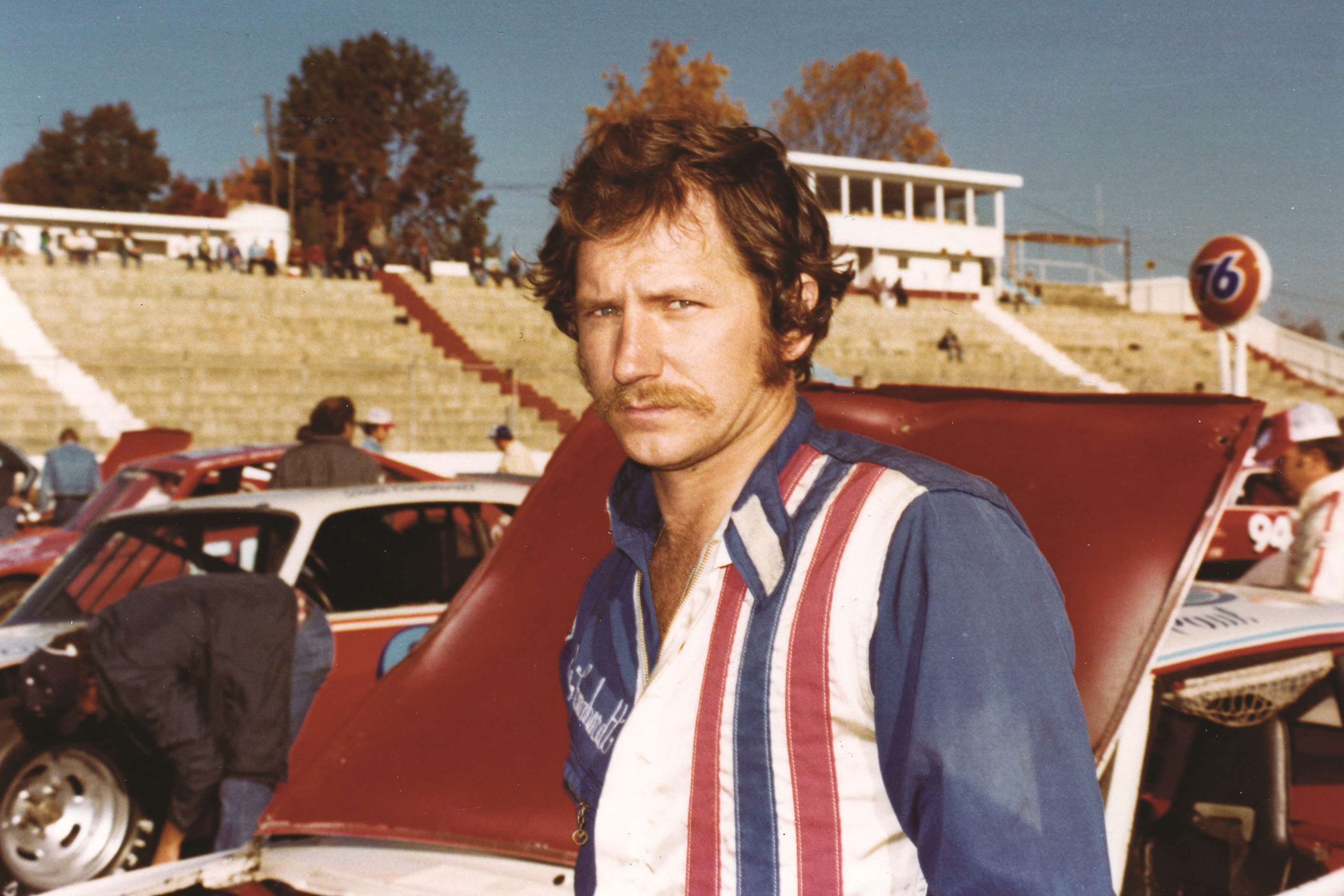
Dale Earnhardt prepares for his first ever Cup Series race in 1975. He would go on to win a total of 76 Winston Cup races over the course of his career
Earnhardt was much more than an on-track bully, however. He had exceptional peripheral vision. Rivals said he could “see the air”, his mastery of the aerodynamic draft on NASCAR’s superspeedways was so supreme. He could nudge a front-running car out of his path without making contact, simply by bearing down and disrupting the air. But if contact were required, he revelled in delivering that, too, generally without spinning out himself.
For many fans, NASCAR died with Earnhardt’s death in a last-lap crash in the 2001 Daytona 500. To be sure, a part of the sport’s soul went with him. And over the past decade, the runaway growth at its peak has subsided. But stock-car racing roars on. It’s the nature of oval-track racing: one left turn follows another, just as each generation of drivers is followed by the next. And there is only one trophy.
This article was taken from the Spring 2019 edition of the Goodwood Magazine.
goodwood magazine
goodwood estate