
































































Those Magnificent Men
In the year the RAF celebrates its centenary, Patrick Bishop recalls the age of the hero pilot, from the flying aces of the First World War to the Battle of Britain’s legendary Fighter Boys.
Goodwood Magazine
magazine article
raf
pilot
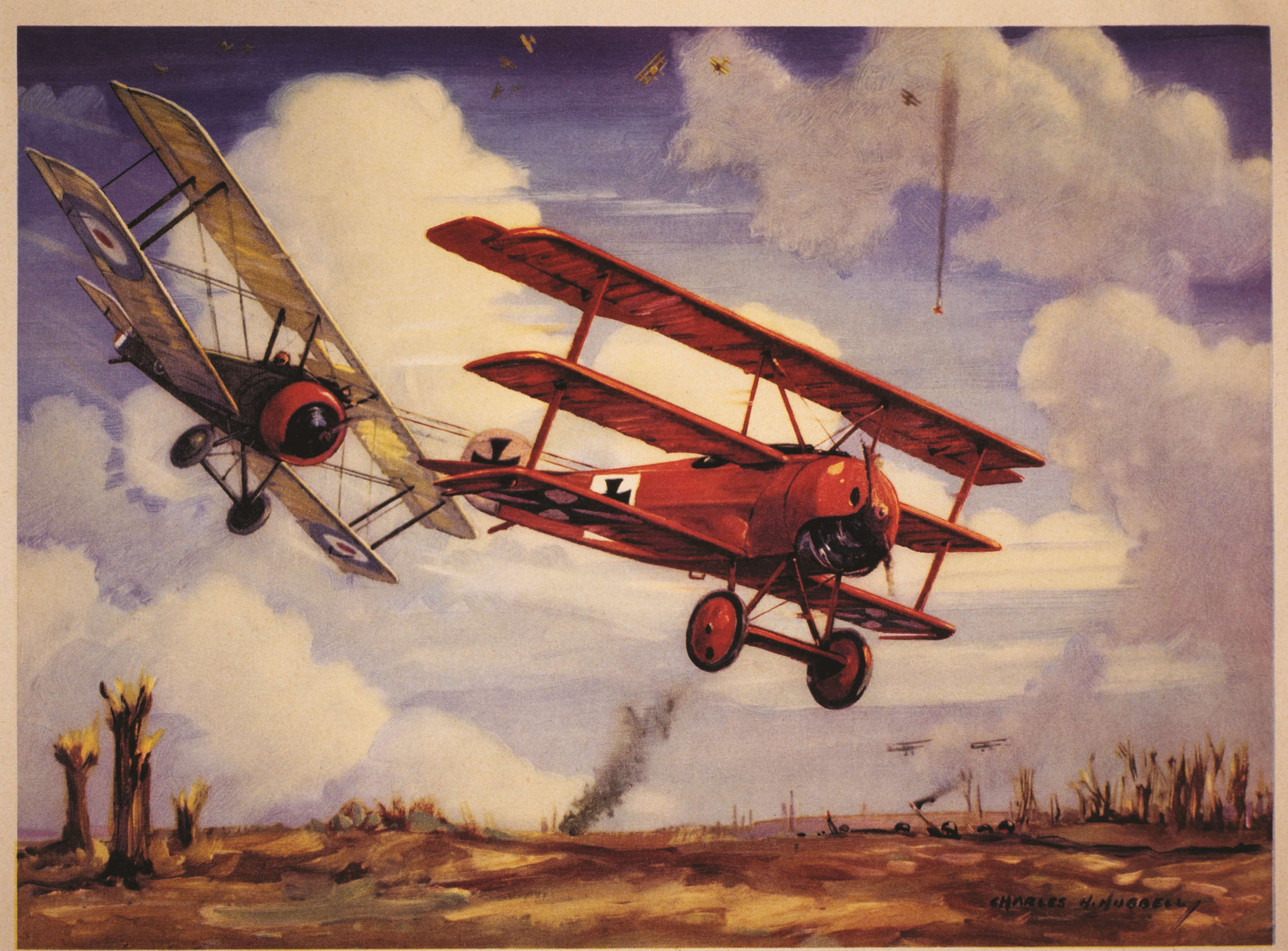
THE NOTION OF THE “ACE” WAS ANATHEMA to those who led the Royal Flying Corps in the early days of the First World War. Hugh Trenchard, the RFC’s commander on the Western Front, thought it bad form to exalt individual over team effort and the supposedly glamorous business of fighter duels over the equally dangerous but less showy work of artillery-spotting and reconnaissance.
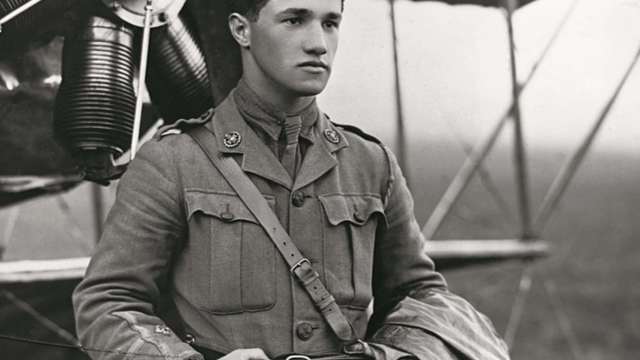
Yet even the force of Trenchard’s bulldozer personality was powerless against an idea whose time had come. By the autumn of 1916, the RFC had its first proper fighter ace, Captain Albert Ball, a fresh-faced enigma who brought down 44 enemy aircraft before – like so many of the breed – he too crashed to his death in May 1917. He was 20 years old.
The First World War was a vast exercise in anonymous slaughter. But unlike the millions of foot soldiers toiling in the trenches, the stars of the air war had faces and names. Along with Ball, the British celebrated the feats of Edward “Mick” Mannock and James McCudden, all of them winners of the Victoria Cross. French heroes like Georges Guynemer and Roland Garros had streets and tennis stadiums named after them. And in Germany, Oswald Boelcke, Max Immelmann and Manfred von Richthofen provided government propaganda writers with the material for 100 stories.
The cult of the ace would persist throughout the First World War, at the end of which the Royal Air Force came into being, and into the next. It reached its apotheosis in the legend of the RAF Fighter Boy, whose courage and skill saved Britain and the world from the Nazis in the Battle of Britain, fought in our skies over the summer of 1940.
The rise of the ace is easy to explain. There was little glory in the mud and blood of trench warfare. Government propagandists faced problems persuading the public that their menfolk were engaged in a noble cause. The air, by contrast, seemed like a clean battlefield in which warriors who embodied national virtues and characteristics faced each other in something like a modern version of mediaeval mortal combat. Instead of horses, they had aeroplanes – then an utter novelty and already associated with glamour and progress.
Thus past and present were fused into a hero for the 20th century: brave, insouciant, chivalrous, his vitality only sharpened by the omnipresent shadow of death. Few of these heroes fitted conventional military stereotypes, however. Ball wore his thick, dark hair long and his behaviour bordered on the eccentric. Mick Mannock was a maverick, a socialist and an Irish patriot who believed in “liberty of speech, freedom of thought and kindness to those who need it”. Nor did they all come from the traditional officer caste. Ball was the son of an upwardly mobile plumber, Mannock’s dad was a British army NCO and James McCudden started his RFC career as a mechanic.
Their German counterparts hailed from a more familiar landscape. Manfred von Richthofen belonged to a prominent Prussian family, but the Red Baron’s personality diverged from the stiff, emotionally constipated stereotype. He enjoyed his fame, writing an autobiography Der Rote Kampfflieger [The Red War Flier] in which he treats air fighting as the ultimate big game hunt. “When I have shot down an Englishman my hunting passion is satisfied for a quarter of an hour,” he wrote.
Like a conventional sportsman, he was keen on trophies and the mess of his Flying Circus was hung with the debris of his victims’ aircraft. It was a habit he shared with Mannock, another inveterate crash-site scavenger. In keeping with the hunter’s philosophy, he admired his prey and had strong ideas about the relative merits of his targets. He preferred “those daring fellows the English” over the “French tricksters”, though he believed that what the former regarded as bravery “can only be described as stupidity”.
Richthofen’s braggadocio was tempered by an attractive melancholy, a recognition that in the end it was all a ghastly game and he wouldn’t make it to the final whistle. Mannock was also a fatalist, dampening a mess conversation about peacetime plans by remarking, “There won’t be any ‘after the war’ for me.” His comrades protested but a few weeks later, on 26 July 1918, he was dead, the victim not of a German ace but ground fire from the enemy trenches.
In letters and diaries, exultation at scoring is often followed swiftly by revulsion. Ball wrote to his father a few days before his death: “Oh! I do get tired of always living to kill, and am really beginning to feel like a murderer. Shall be so pleased when I have finished.” Unsurprisingly perhaps, such morbid thoughts did not preclude a riotous approach to off-duty life. From the outset, fliers were associated with girls, drink and fun. The image was embedded by the writings of RFC veterans like Cecil Lewis, who joined the RFC aged 17, survived three operational tours and left behind him a classic account of the golden age, Sagittarius Rising.
“The RFC attracted the adventurous spirits,” he wrote. “The devil-may-care young bloods… the fast livers… men who were not happy unless they were taking risks.” Flying was “still something of a miracle. We who practised it were thought very brave, very daring, very gallant: we belonged to a world apart.” Mess “drunks” were spectacular, sometimes ending in the airmen sucking on a bath sponge soaked in a mixture of champagne and whisky. And when you were dicing with death several times a day, warnings of the health risks of consorting with the local floosies were unlikely to cut much ice – as evidenced by a drinking song describing the aftermath of a harrowing day of combat.
But safely at the ’drome once more, we feel quite gay and bright. We’ll take a car to Amiens and have dinner there tonight. We’ll swank along the boulevards and meet the girls of France. To hell with the Army Medical! We’ll take our ruddy chance!
The knightly metaphor that attached itself to the airmen suggested more than just valour and prowess at arms. Chivalry came with virtuous obligations, among them the duty to protect the weak. This aspect was given substance early on in the air war when in September 1916 William Leefe Robinson won a VC for shooting down a German airship during a raid on the defenceless civilians of London. His handsome features were plastered over the illustrated papers and bits of the doomed dirigible were flogged as souvenirs.
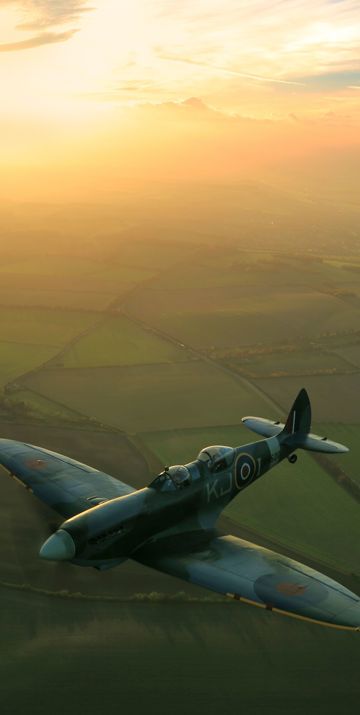
A quarter of a century later it was the turn of the young paladins of RAF Fighter Command to reprise this role on an epic scale. The Battle of Britain was the high point in the story, when a small band of courageous fighter pilots became the saviours of the country. The precise military import of the Battle of Britain will no doubt be debated for ever, but in the end it is the legend that matters rather than the dry facts. In the long hot summer of 1940, a few thousand young pilots, in full view of many of the population, confronted the Luftwaffe armadas and sent them spiralling to earth, taking with them Hitler’s hopes of subduing Britain and setting some of the conditions for Germany’s defeat.
The Fighter Boys became the darlings of the nation. Cecil Beaton was rapturous. “A new model of men has been cast,” he proclaimed. “The feats of their bravery haunt us, they baffle us and satisfy completely the spirit of romantic daring inherent in our island race.” In keeping with what was presented as a People’s War, the backgrounds of this elite band were a reasonably accurate reflection of Britain’s social composition. Among the men flying Hurricanes in 32 Squadron were Mike Crossley, an old Etonian, John Proctor, who left school at 14 to become an RAF apprentice, Ollie Houghton, a former fitter in a Coventry factory, and Bill Higgins, a Derbyshire primary school teacher before the war.
Aces made valuable propaganda assets and the government publicity machine promoted them vigorously. In the post-Battle period, Douglas Bader and his tin legs emerged as a symbol of British grit. Paddy Finucane, the square-jawed, self-effacing Irishman, was a favourite with Britain’s women. The pencil moustache and matinee idol looks of Bob Stanford Tuck on the other hand, hinted at a more raffish aspect of the Fighter Boy image.
By 1942 the fighter ace was being edged from the limelight by the stars of Bomber Command, who were gradually moving to centre stage as the RAF took the fight to Germany. Guy Gibson and Leonard Cheshire were the new emblems of Britain’s air war, presenting a steadier persona than the gallants of Fighter Command and emphasising that Britain was in it for a long haul. They were the last of the RAF heroes to achieve national recognition. Post-war conflicts were messy and with ever-advancing technology the role of the pilot became almost incidental. The last encounter that could properly be described as a dogfight took place 36 years ago over the Falklands, when two British Sea Harriers shot down three Argentinian Skyhawks.
There is unlikely to be another one. Nowadays much air power is delivered by Unmanned Aerial Vehicles, and there is no further need for aces. The supersophisticated new Lockheed Martin F-35B Lightning fighters now arriving at RAF squadrons may have a human in the cockpit but computers do most of the work. According to an RAF jet pilot I spoke to recently, the man or woman at the controls is really there for one thing only: to override the controls in the event of a cyber attack. An important role, but a far cry from the RAF of a century ago – from Captain Ball, the Red Baron, and those other knights of the sky.
This article was taken from the Autumn edition of the Goodwood Magazine.
Goodwood Magazine
magazine article
raf
pilot