



















































Float Planes and the Rob Wildeboer Scholarships
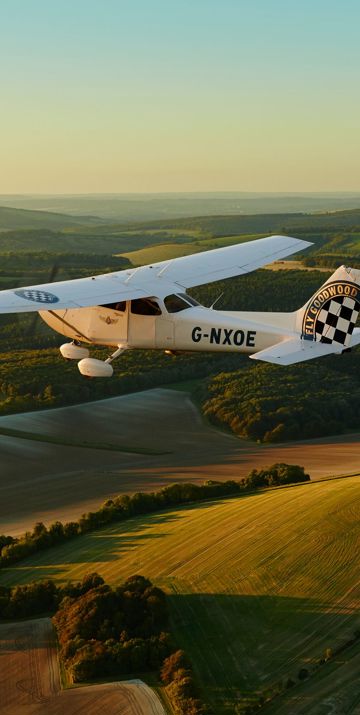
On Tuesday 20 July 2021, the Goodwood aviation community experienced an immeasurable loss with the passing of Rob Wildeboer, the Goodwood Flying School Manager, after a sudden illness.
Since 2022, to honour Rob’s memory and legacy, scholarships have been established by Goodwood Flying School to support students in their aviation journeys, made possible through the generous contributions of the flying community. Funds have been raised in various ways. One of those, in 2025, was a silent auction, with bids placed online for everything from flying theory books to a float plane introductory experience flight. Andy Reohorn was lucky enough to win the float plane experience and below he reflects on his adventure.
Aviation
Aerodrome
Goodwood Aero Club
Rob Wildeboer
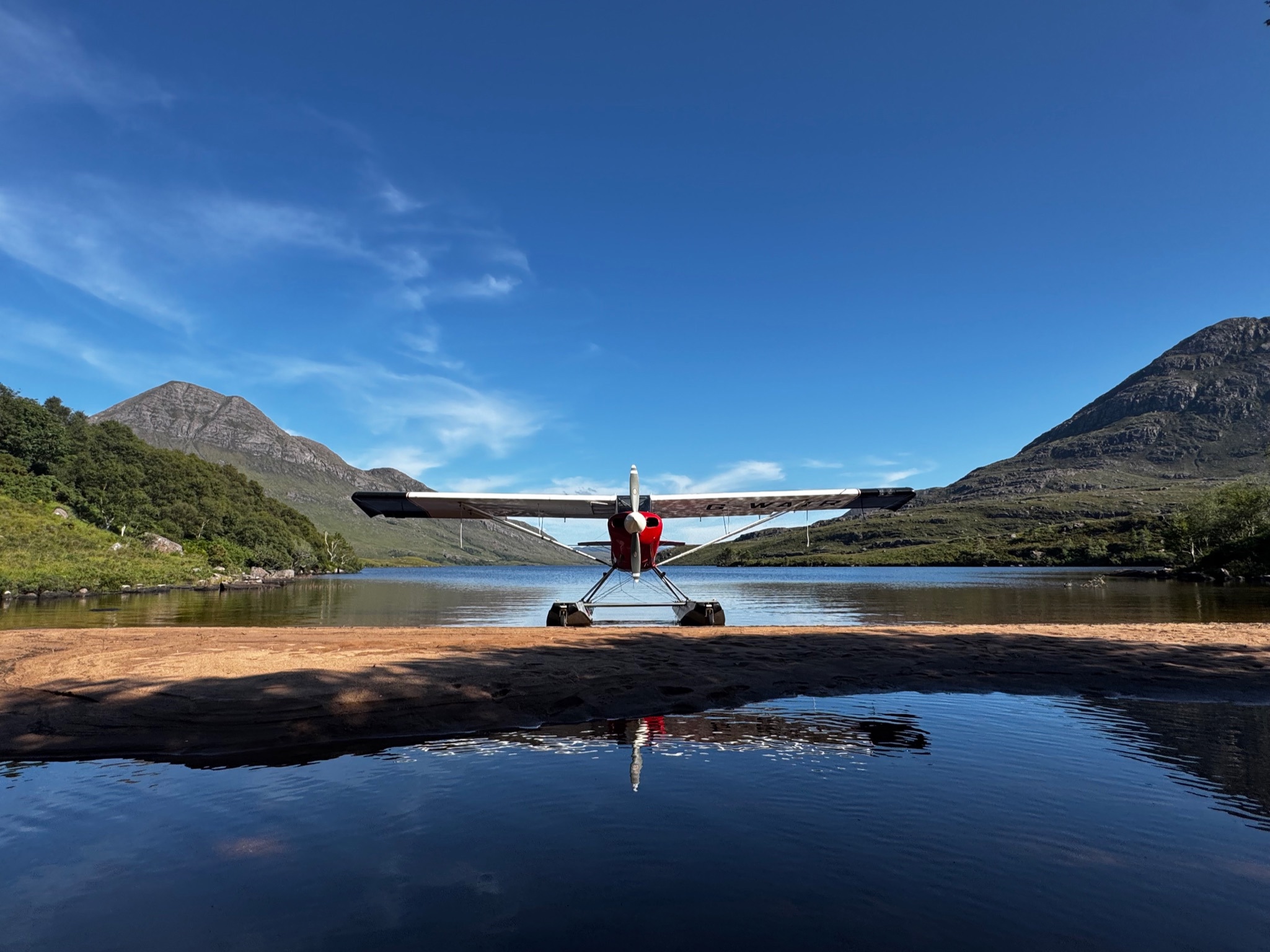
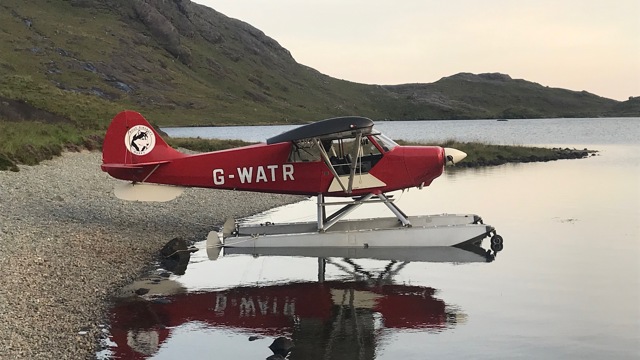
“I managed to match weather, availability of myself and the owners of the aircraft this past week. Even better, with my love of Scotland, the introduction to float plane flying was to be from Perth. I was also fortunate enough to be flying with Anna Walker and shared dinner with both her and Peter Kynsey the evening before my flight. Both esteemed warbird pilots. They are the owners of a magnificent Husky which has spent a lot of its life in Scotland exploring the scenery and lochs that the country offers.
A thorough and comprehensive ground briefing and intro to the Husky was conducted prior to dinner on the day we arrived in Perth, with both Anna and Pete taking time to explain the various ground checks as well as being familiarised with the aircraft. Float planes sit a great deal higher than the land-based versions and there is a lot to consider.
The following day dawned bright and with a steady breeze from the WSW. For training, anything above 10 knots will make landing on water tricky and as this was a first lesson that was a major consideration. As was the choice of loch we would use, so that we would be pointed more or less into wind for landing. Handling even a moderate crosswind on the first attempt was not desirable.
Checks complete, engine started, we rumbled off down the taxiway. The front wheels (gear down for tarmac departure) are fully castoring and with the large side profile of the aircraft it is a little more affected by the wind. Power checks complete, it was time to depart on the westerly runway which put us on an almost direct heading to our chosen loch.
Take off is with Flap 30 and the flap limiting speed is just 73mph, so Anna demonstrated the take-off but very swiftly gave me control. Gear up, flap up gently in stages, power and RPM set (it has a variable pitch prop) we climbed up to just under the 3,200’ cloud base and I enjoyed getting to know the aircraft a little better during the general handling phase of the flight. A few turns and then a look at some stalls. It is very easy to exceed flap limiting speed on the full flap stall recoveries, care needs to be taken and at the fully developed aerodynamic stall it has an entertaining wing drop, albeit easily recovered. General handling over, we carried on to our chosen loch, admiring the freshly washed scenery below.
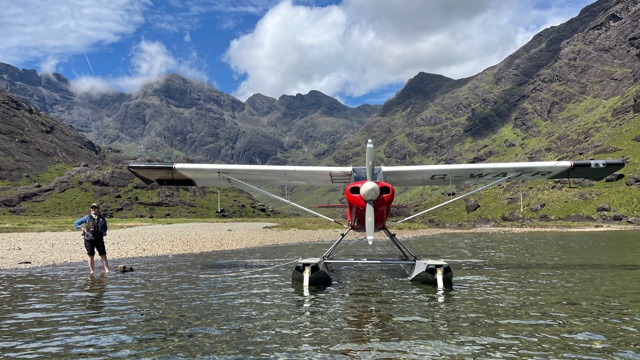
It had rained quite a bit overnight, the multitude of different shades of green showing themselves off in the dappled sunlight. A light breeze at ground level meant that the fields were changing colour as the ripening crops showed their top and undersides as they swayed in the breeze. In the clear air, every detail of carefully mown lawns was intensified, every colour was deeper and hit our retinas with more clarity than a camera could ever capture. The loch we were aiming for appeared in between the Munros which stood guarding the banks of the loch.
I asked if we should start a descent yet as we closed in on the inky waters, however an initial WOODS (wind, obstructions in or on the water, obstructions above the water, depth and space) check was demonstrated.
Anna would demonstrate the first landing, with me following through on the controls (a common training method in aviation). This enables me to concentrate on the picture outside, as well as to feel the control inputs that are required throughout.
Talking through everything that she did, like every good instructor is able to do, we descended closer and closer to the surface of the water. Speed stable (65 mph) and with enough power to enable a gentle rate of descent), we very soon landed on water. What a cool feeling that is! A family and their dog were sat on a blanket on the loch side and they clearly thought the same, their cheery waves enthusiastic and friendly."
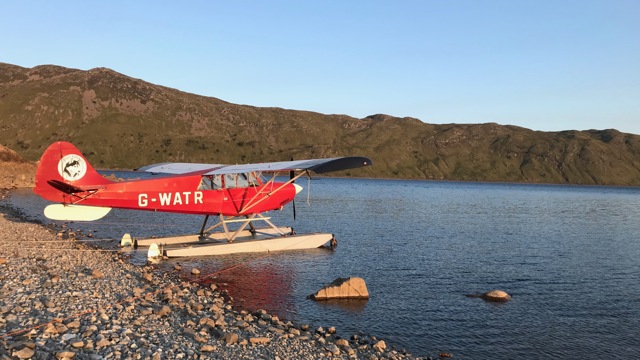
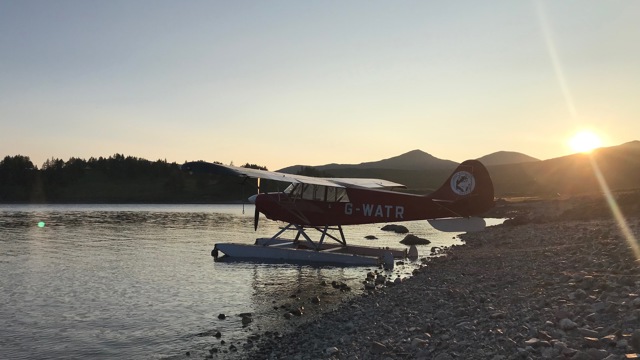
"Now landing on water is very different to landing on grass or tarmac. The landing gear is up for one thing. Something us land based pilots dread ever doing. Once on the water one is far more at the mercy of the wind than when on land. There are no taxiways to follow or designated areas to park, no yellow lines to follow. Once at a standstill, the aircraft weathercocks into the wind and then with no intervention will drift with the wind. Float plane pilots will lower the water rudders (fitted at the rear of the floats, but operated from within the cockpit) which allows a degree of steering to occur, so long as the wind is not too strong; however the pilot will have carried out a good WOODS check of course and not landed were this the case.
If 1,000rpm is set (in the case of the Husky), this will allow slightly more accurate steering, however the wind is very much still an influence on which way you can turn and how successful that turn might be. It takes a fair degree of thought, along with the correct input of aileron to assist along the way. There is a reason why float plane pilots take a maritime based written exam before they are allowed to land on water without an instructor on board. If all else fails, float plane pilots will also carry paddles to steer the ‘craft too. This tends to be used more when approaching a mooring or river/loch bank. Not on today’s schedule of learning.
After ten minutes of wafting around on the water, looking at all these effects and how to counter them, it was time for Anna to demonstrate a take-off from water. This involves the floats coming up onto Steps, which means that it is the process of the aircraft breaking free from the water surface to enable it to become airborne. The theory had been covered in detail, now to see it in action. Water rudders stowed. Gear definitely up. Flap set. The power is added, the usual rudder input applied to keep straight, along with elevator back and the aircraft starts to move. Step 1 is very obvious, as the nose rises. There is then a secondary Step which is more subtle. It is now time to ‘adopt the attitude’ which relies on elevator input to lower the nose, but not so much that the floats would dig in; before you know it, the aircraft is flying.
“You have control” comes from the rear seat. I am soon reminded that there is no need to climb that high, so I level off, maintaining flap and speed below 70mph and make a left turn downwind. WOODS check complete, start a turn to my selected landing area, keep it stable, gently does it, just before touchdown the stall warner starts to whine and we are down. My first water landing! A triumphant and jubilant grin to the rear seat, but time to position myself for a take-off. Not as easy as it looks, I tended to hold too much back pressure on the controls, so the aircraft was dragging itself off rather than flying itself off gently.
We do a couple more landing and take offs. This is cool. This is properly grin inducing. We then stay down on the loch. Anna wants to demonstrate step taxying. Power until the aircraft is on the step and then reduce that power to maintain a flat attitude at 40mph. Ah now I see. That is where the nose should be just prior to take off. I am very much a ‘monkey see, monkey do’ type of learner. Having tried it for myself, skimming the crests of the small waves like a speedboat, I hoped that would improve my take offs. It did, a little. It’s all about getting the picture and having the confidence along with getting a feel for the aeroplane being flown. A little like the first time one flies a tailwheel and, on the take-off, roll the stick is pushed forwards to lift the tail off the ground before getting airborne; needs confidence to work out stick forces and the attitude required.
After a couple of more circuits around the loch, we did a bit of sightseeing to the end of the loch and back. Having waved to more friendly people on the ground, we turned back to fly along the loch. This was such fun. So much fun that I was allowed one last landing, which was minus input from the back seat. A little slow a little too soon, but an OK landing. Savouring every last fluid ounce of the view from the loch it was a take-off and depart back from whence we came."
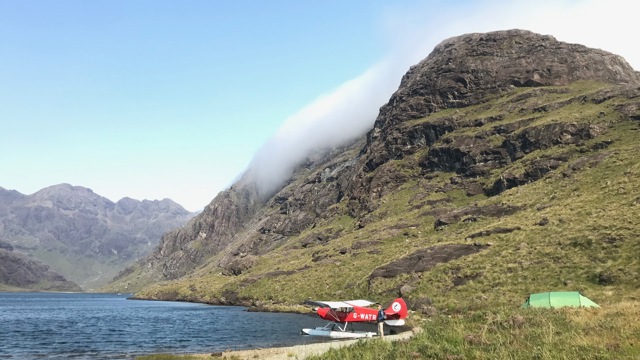
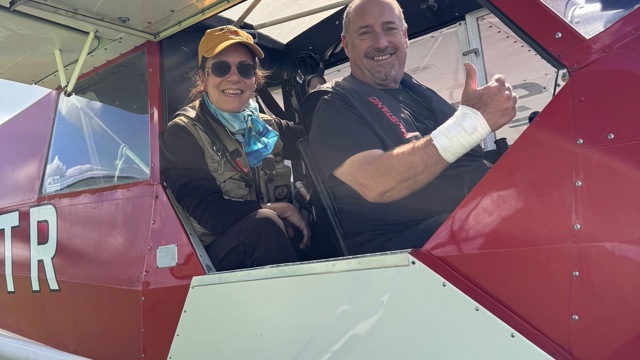
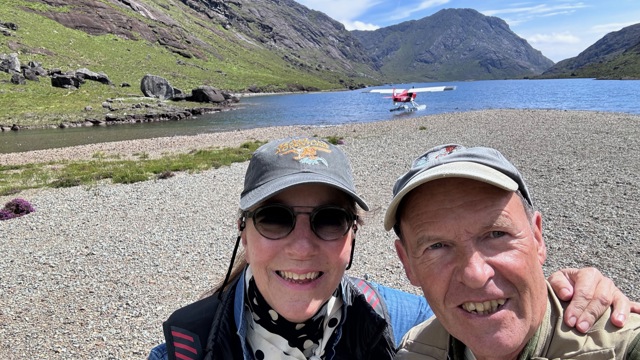
"Wow! What a splendid experience. Lots covered, spectacular scenery, great company and I learned so much. Would I do it again? Sure thing! There is something really special about the freedom of float plane flying. Flying allows you huge freedoms anyway, in this world which is becoming increasingly bound up in suffocating erosion of the ability to be free. Now to win the lottery, buy a fishing rod and a couple of canoes to lash on to the floats and escape modern life regularly.”
A huge thank you to Anna and Pete for offering this experience to our 2025 silent auction and for supporting the Rob Wildeboer Scholarship every year.
Aviation
Aerodrome
Goodwood Aero Club
Rob Wildeboer