



































































































































Your Breath, Your Gut & the Bigger Conversation
This year’s Goodwood Health Summit, presented by Randox Health, explored the fascinating connection between breathing and the microbiome. Here, Goodwood wellness retreat practitioner & breath expert Dan Hughes of Vitae Vi looks more closely at how the way we breathe may relate to the gut microbiome and our wider health.
Health and Wellbeing
Health Summit 2026

We tend to think of the body in compartments.
The lungs breathe.
The gut digests.
The brain thinks.
The nervous system deals with stress or relaxation.
But our bodies don’t really work that way.
They’re constantly communicating, and the more we learn about human health, the more interesting those conversations become.
One theme from the Summit was the relationship between breathing, the microbiome and whole-body health.
It got us thinking: what does the way we breathe have to do with what’s happening in our gut?
The answer isn’t simple, but it is fascinating: your breath does more than keep you alive.
An adult breathes around 20,000–25,000 times a day, with most of those breaths happening without conscious thought, which is exactly as it should be.
But breathing isn’t fixed. It changes when we’re exercising, sleeping, concentrating, stressed, anxious, relaxed or recovering.
The way we breathe is closely connected to our autonomic nervous system—the part of us involved in regulating heart rate, blood pressure, digestion and recovery.
Think about what happens when you’re under pressure. Your breathing might become quicker and move into the upper chest. Your shoulders rise, your jaw may tighten and your attention narrows. Your body prepares to deal with whatever is demanding your attention.
This is a useful evolutionary and physiological response if you’re running from a lion at the entrance to your cave. It is perhaps less useful when the ‘lion’ is an overflowing inbox, a difficult conversation or another day of feeling overwhelmed and permanently ‘switched on’.



Your gut is listening
We’ve all experienced butterflies before an important meeting, feelings of discomfort, a nervous stomach or a loss of appetite when we’re stressed.
That’s because the gut and brain are in constant communication through a complex network involving the nervous system, hormones, immune signalling and the trillions of microorganisms living within us. This connection is known as the gut–brain axis.
Increasingly, researchers are looking beyond that two-way relationship towards something even bigger, including the connection between the gut and the lungs.
So, what is the gut–lung axis?
The gut and respiratory system have their own microbial communities and immune environments, while also communicating with one another. Sitting right in the middle of this conversation is something we tend to take completely for granted: the breath.
So, can breathing improve your microbiome? This is where it’s important not to get carried away. We’re not going to tell you that nasal breathing will fix your gut or that a particular breathing exercise will transform your microbiome.
The human body—and especially the microbiome—is far too complex for that. Nonetheless, there are some very interesting connections.
We know that the way we breathe can influence our autonomic nervous system, shifting us towards a fight-or-flight (sympathetic) or rest-and-digest (parasympathetic) state. The autonomic nervous system also influences digestion.
Our diaphragm sits directly above many of the organs involved in digestion, creating movement and changes in pressure every time we breathe. As noted above, our breathing patterns are also influenced by our emotional and physiological state.
Perhaps, then, the more useful question isn’t, ‘Can breathing change my microbiome?’ but, ‘Could the way I breathe be part of the environment in which my whole body operates?’
Functional breathing is less about doing more and more about doing what is appropriate. It definitely isn’t about taking bigger breaths; quite often, it’s the opposite. It’s about breathing in a way that suits what you’re doing: through the nose where suitable, using the diaphragm, and doing so quietly and efficiently.
The benefits of functional breathing
Functional breathing means allowing your breathing to respond to the demands of the moment and recognising when it has become part of the problem, rather than simply reacting to what’s happening. As a reminder, breathing doesn’t just respond to our state; it can also influence it.
A slower, quieter breathing pattern can help create the conditions for the nervous system to move away from high activation and towards a state associated with rest and digestion. The body prioritises digestion in this more restorative state; when it senses a threat, digestion takes a back seat while attention and energy turn to dealing with that threat.
It’s one reason we talk so much in our wellness retreats and breathwork practices about the idea of regulation before optimisation. Sometimes the body doesn’t need another thing to do; it just needs permission to slow down.
Your diaphragm is a key player
We often think of the diaphragm simply as a breathing muscle. But it also sits directly above the abdominal cavity and moves rhythmically with every breath—and that movement matters.
Changes in pressure and movement through the abdomen can influence structures involved in digestion, and clinical research is beginning to explore the role of diaphragmatic breathing in conditions such as reflux and some functional gut disorders.
Again, this isn’t about claiming that breathing is a treatment for digestive disease. Rather, it’s about appreciating the physical relationship between breathing and digestion.
Then there’s your microbiome
This might be the part that really makes you stop and think. When we hear ‘microbiome’, most of us think only about the gut. But microbial communities exist throughout the body, including in the mouth, nose and airways. These communities interact with our immune system and with one another, and we are still learning exactly how these relationships work. That’s important because the microbiome is influenced by an enormous range of factors, including diet, medication, environment, lifestyle and immune function.
There is, however, a fascinating ecosystem within the body, and our breath is part of it. So, what can we actually do with this?
You don’t need a complicated protocol, you don’t need to count every breath and you don’t need to buy another supplement. It’s much simpler: before your next meal, let your shoulders soften, close your mouth and breathe gently through your nose.
If it feels comfortable, allow your exhale to become slightly longer than your inhale.
Just a minute or two of quieter breathing.
Then eat: chew slowly, notice the food, swallow properly and keep your tongue resting against the roof of your mouth.
This simple practice points to the wider value of breathwork.
What makes it so fascinating is that it starts with something incredibly simple.
Breathing.
Follow that thread and it leads to the nervous system, the stress response and recovery, and then to sleep, digestion, movement, the gut–brain axis, the microbiome and the way our environment interacts with our physiology.
Suddenly, something we do 20,000 times a day doesn’t seem quite so ordinary.
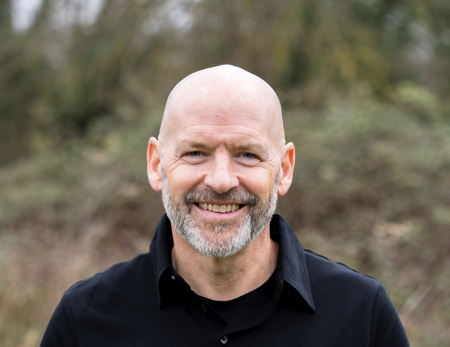
Vitae Vi — helping people breathe better, stress less and perform at their best.
Dan Hughes an Oxygen Advantage Advanced Breathwork Coach, an Alchemy of Breath Conscious Connected Breathwork Facilitator & Wim Hof Method Instructor. His wife Karyn is equally qualified in functional and concious connnected breathwork.
Through their work with individuals, groups and organisations, they explore the practical relationship between breathing, nervous-system regulation, resilience, recovery and wellbeing.
They hold a Core-Energy Breathwork class at the Goodwood Health Club bi-weekly - on Friday evenings, bookable through the members app.
Health and Wellbeing
Health Summit 2026
-

Gut Health Programme
-

Active Longevity Retreat
-

The Mood Food Connection Retreat